

Across the country, health systems, policymakers, and people-centric organizations are turning to social prescribing, connecting people to non-clinical, community-based resources, including the arts, as part of how we support health and well-being. Southwestern Pennsylvania has the ingredients to build something real here: a strong arts ecosystem, engaged health systems, and policymakers ready to listen.
Massachusetts became the first U.S. state to scale social prescribing statewide, in partnership with SocialRx, building on a six-year pilot with significant evidence that arts-based social prescribing is an effective, cost-effective treatment option.
On November 4, 2026, the Arts Council brought together leaders from the arts field, policy, philanthropy, and healthcare for a Policy & Action Roundtable on Social Prescribing in Southwestern Pennsylvania to move past the concept and into specifics:
- Where, and in what ways, can social prescribing deliver real impact in our region?
- What could social prescribing mean for our regional arts ecosystem?
- What policy and funding infrastructure needs to be built to support it?
This was the second in the Arts Council's Policy and Action Roundtable series, designed not just as a conversation but as a working session, panel insight, small-group discussion, and shared next steps, so that everyone in the room leaves as a thought partner rather than a spectator.
For a recap of the discussion, we recommend Pittsburgh Progress reporter Erin Hébert's story, Can access to the arts keep the doctor away?, and Trib Live reporter Josh Ewers' story, Could doctors prescribe art, music and nature? Pittsburgh experts explores social prescribing. Both articles cover what panelists and attendees shared and the big questions still ahead, from who pays for social prescribing to how to make sure it reaches the people who need it most and supports the artists who do the work.
Section title
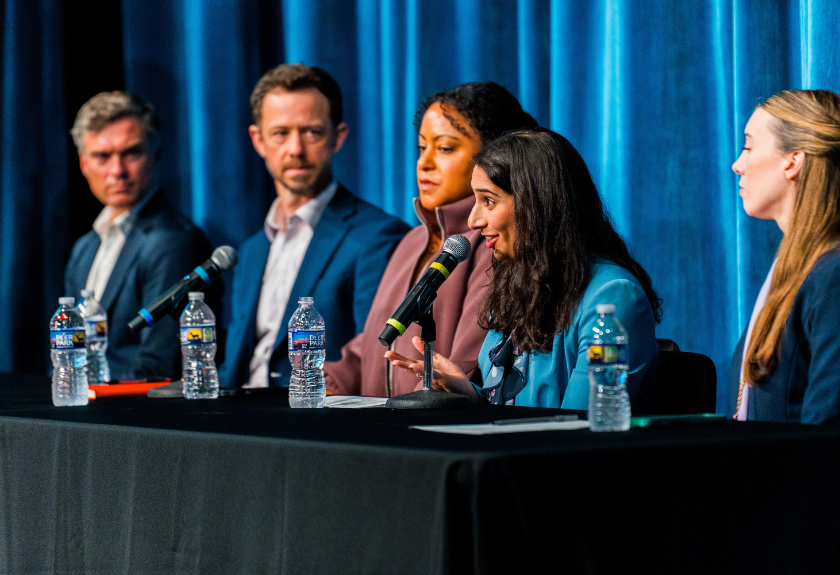
Featured panelists
- Courtney Abegunde, Managing Director, Steel Smiling
- Chris Appleton, Founder & CEO, SocialRx
- Rep. Jessica Benham, PA House of Representatives - Chair, Mental Health Subcommittee; Chair, Aging & Older Adult Services Programs & Benefits Subcommittee
- Dr. Matt Hurford, President of Community Care Behavioral Health at UPMC Insurance Services Division
- Dr. Sushma Kola, Director of Integrative Neurosciences with the AHN Neuroscience Institute
Featured voices
Ahead of the Policy & Action Roundtable, we also published a series of first-person essays on the importance of arts and culture as a strategy in health and wellness.
- How writing is healing a community of older adults in Pittsburgh by Mary Schinhofen
- How hip-hop is shaping lives in Pittsburgh, from youth to adulthood by Farooq Ameen Al-Said
- Arts are Part of a Healthy Neighborhood by Tamara Dubowitz, Sc.D., M.S., M.Sc.
Section title
Support from the City of Pittsburgh
"The City Council of Pittsburgh does hereby affirm the essential role of arts for health initiatives in improving health and well-being and other life-long benefits."
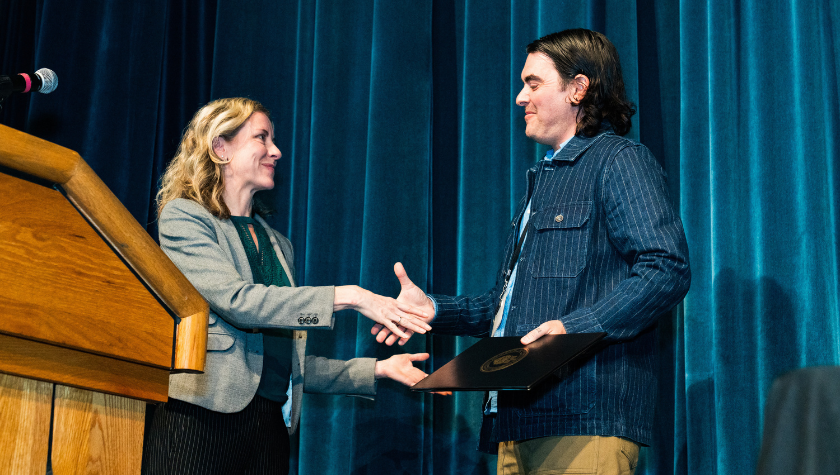
During the Policy & Action Roundtable, Pittsburgh City Councilperson Erika Strassburger presented a proclamation to Arts Council CEO Patrick Fisher, recognizing the work the arts play in healthcare and wellness, along with the people making it possible in Pittsburgh.
Section title
Next steps
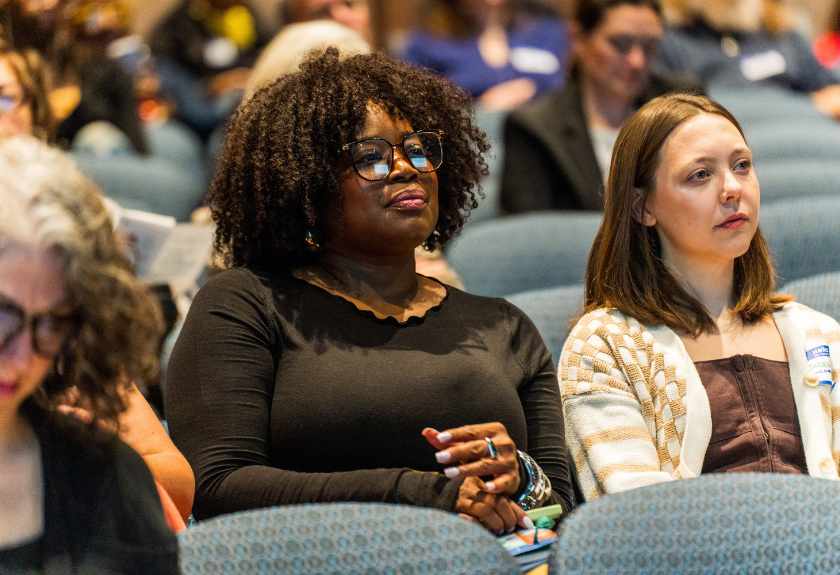
Attendees at the Policy & Action Roundtable came from across sectors, including arts and culture (57%), health care and behavioral health (12%), community and social services (10%), philanthropy (7%), government (5%), and the general community (9%).
This event confirmed that people across our region see real value in pursuing social prescribing. In a live poll during an interactive community discussion, every one of the 92 people who answered said an arts experience had supported their own mental or physical health, or that of someone close to them. When asked whether social prescribing should be a priority for the region, the average answer was 4.6 out of 5.
They told us they see social prescribing as a way to address the health consequences of loneliness and isolation, to connect people to care beyond the clinic, and to open new pathways for artists and arts organizations to support community well-being.
But what we heard during and after the event is that social prescribing is just one piece of a bigger question: how the arts and health care can work more closely together in our region.
To read more on our next steps, please visit our blog post, Building an Arts and Health Future for Southwestern PA.

