

Advocacy |
Building an Arts and Health Future for Southwestern PA
Allegheny County is known nationally and around the world for its arts and culture and for its “eds and meds.” Increasingly, those two strengths are finding each other.
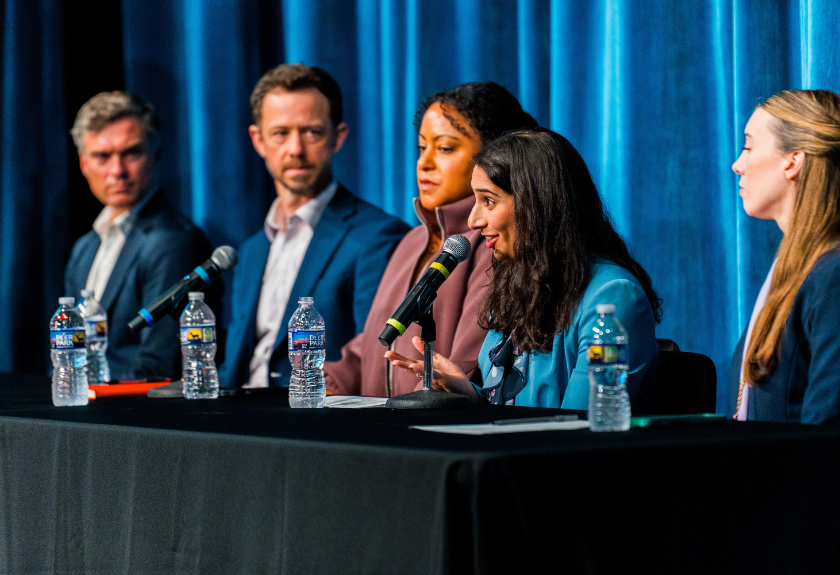
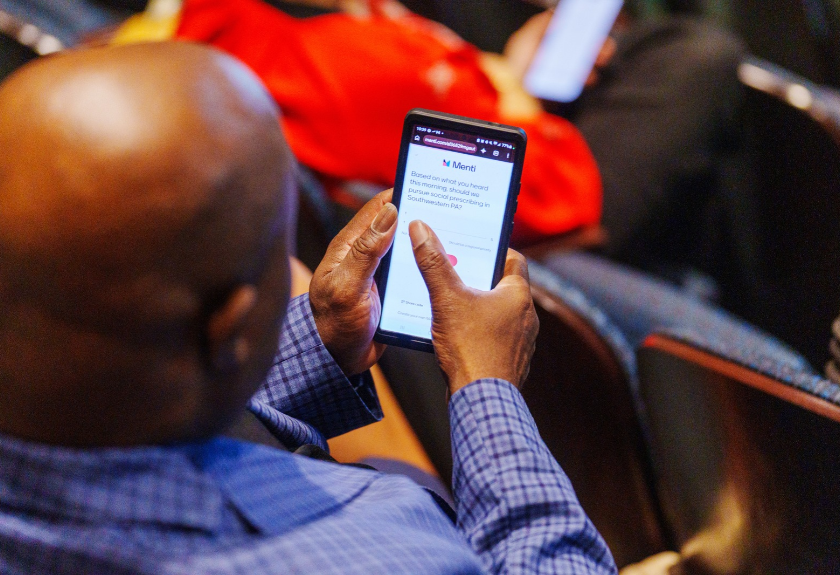
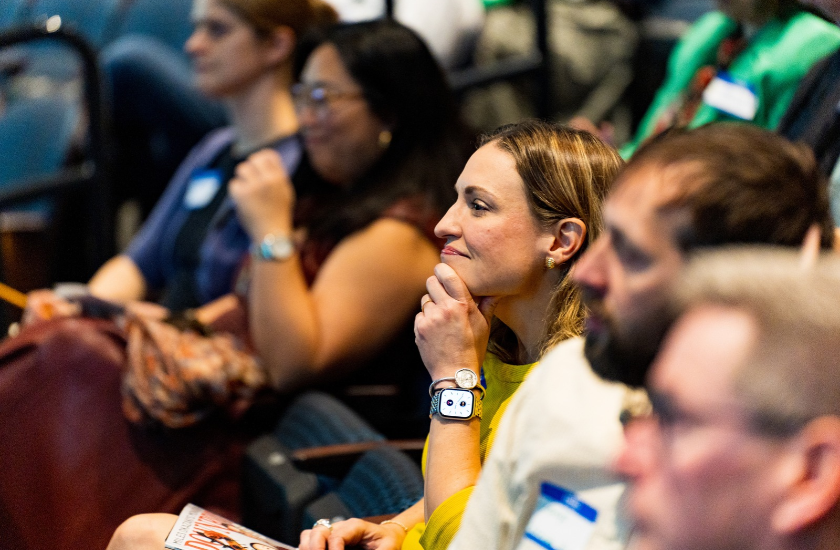
On November 4, the Greater Pittsburgh Arts Council convened nearly 150 attendees, in person and via livestream, at Manchester Craftsmen’s Guild for its second Policy & Action Roundtable. The event focused on social prescribing, a way for a clinician, social worker, or care navigator to connect someone to the arts and their community as part of their care. The practice started in the United Kingdom and has since spread across Europe and Canada. In the U.S., Massachusetts became the first state to take it statewide in 2024.
For a recap of the discussion, we recommend reading Can access to the arts keep the doctor away? by Pittsburgh Progress and Could doctors prescribe art, music and nature? Pittsburgh experts explores social prescribing by TribLive. Both articles cover what panelists and attendees shared and the big questions still ahead, from who pays for social prescribing to how to make sure it reaches the people who need it most and supports the artists who do the work.
The conversation confirmed that people across our region see real value in pursuing social prescribing. They see it as a way to address the health consequences of loneliness and isolation, to connect people to care beyond the clinic, and to open new pathways for artists and arts organizations to support community well-being.
But what we heard during and after the event is that social prescribing is just one piece of a bigger question: how the arts and health care can work more closely together in our region.
A bigger picture
Here in Southwestern Pennsylvania, the arts are already showing up in health and care in many forms. At Allegheny Health Network, Dr. Sushma Kola’s Dance for Parkinson’s classes help patients improve their coordination, posture, and balance. At UPMC Children’s Hospital of Pittsburgh, the Creative and Expressive Arts Therapy program brings board-certified music and art therapists to young patients and their families, offered at no cost thanks to philanthropic support. UPMC has also commissioned original artwork for its hospitals, from the UPMC Mercy Pavilion to UPMC Shadyside, to create healing environments for patients, families, and staff. And Infinity, a band formed in partnership with UPMC Western Psychiatric Hospital and composer and conductor Flavio Chamis, brings together musicians living with schizophrenia, with music serving as both creative outlet and part of their care.
Arts organizations are leading this work, too. RealTime Arts has brought its Equitable Dinners performance series into Allegheny Health Network. With support from AHN’s Center for Inclusion Health, employees and patients can see a live performance over lunch, followed by an in-depth conversation about the questions the play raises. At Contemporary Craft, Revolutionary Care invited visitors to see care itself as a daily practice, bringing together three artists whose work explores individual and collective healing, rest, and restoration. Its current exhibition, Textures of Being, honors the body as a source of creative knowledge and reimagines disability through lived experience, inviting reflection on what it means to inhabit a body and to care for one another. And every day, people turn to choirs, studios, dance floors, and community workshops to manage stress, find connection, and stay well.
Think of it as a spectrum:
- Arts in places of care: Visual art and design woven into hospitals, clinics, and treatment centers.
- Arts in clinical care: Programs built into a patient’s treatment, like dance for Parkinson’s or arts therapy.
- Social prescribing: Care providers formally prescribing arts and cultural experiences, with outcomes tracked and the loop closed.
- Arts as everyday wellness: The self-guided ways people use creativity and community to regulate emotions, move their bodies, and connect.
That range gives our region a rare opportunity: not just to pilot one program, but to build a comprehensive regional strategy for arts and health.
Where we begin
No single organization can build this alone, and no single organization should decide what it becomes. That’s why the first step is the one the room recommended: forming a cross-sector working group with shared leadership.
If you’re interested in contributing, we welcome you to let us know by filling out this form.
The working group will bring together people from the arts, health care, insurance, philanthropy, public office, research, and the communities this work is meant to serve. Its members, not the Arts Council alone, will define what this work aims to achieve, which strategies to pursue, and in what order. The Arts Council’s role is to convene, coordinate, and support that work, not to set its direction.
Ideas on the table
Through the roundtable and the conversations since, partners have raised several ideas the region might consider. We share them here as a starting point for the working group’s conversation, not as a plan already decided:
- Deciding where to focus first. Evaluating and prioritizing which populations, health conditions, or types of arts experiences would make the strongest starting point, based on need, evidence, and where partners are ready.
- Setting shared equity goals. Defining what equity should look like in this work from the start, including who it reaches, who helps shape it, and how we’ll know it’s serving the communities that have too often been overlooked.
- A feasibility study to map what already exists across the full arts and health spectrum, identify gaps, and assess what it would take to sustain this work.
- A comprehensive arts and health plan for Allegheny County or the broader region, one that could attract public and private investment, with social prescribing as one possible part of it.
- Engagement with Pennsylvania’s State Health Improvement Plan, which is reviewed each year and will be rewritten after 2028.
- A conversation with the Pennsylvania Department of Human Services about what a Medicaid waiver for social prescribing could look like over the long term.
The working group may take up some of these ideas, reshape others, or chart a different course entirely. That’s the point.
Openings in front of us now
Interest in arts and health is at a high point, and several opportunities are open right now.
- Allegheny County’s health priorities. The Allegheny County Health Department’s Community Health Assessment will shape the County’s next Plan for a Healthier Allegheny. Residents, community organizations, and health partners can help make sure social connection and the arts are part of that picture.
- Youth mental health funding. Pennsylvania is receiving significant funds from a national settlement with Meta, meant to address the youth mental health crisis. Arts and cultural programs that help young people connect, create, and cope belong in that conversation, and young people themselves should help shape it.
- A pilot in Allegheny County. The Arts Council has an active funding request with the Commonwealth of Pennsylvania that would support a small social prescribing pilot in Allegheny County, serving 200 community members. If the request is awarded, we’ll need partners to help raise matching funds to bring the pilot to life. It’s an early opportunity to test the model here and learn together, and a chance for funders, health partners, and others to help shape it from the start.
Find your place in this work
There’s a role for everyone, whatever your capacity, connections, or interests.
Help shape and lead the work. We’re looking for people from both the arts and health fields to help lead the working group and decide where it goes. Conversations so far point to areas where leadership will matter, such as policy and public funding, health system and payer partnerships, evidence and evaluation, arts sector readiness and workforce care, youth and community voice, and storytelling. The working group will decide which of these to take on, how, and who leads them.
Help bring a pilot to life. If our request to the Commonwealth is successful, the pilot will need matching support, along with health partners to make referrals and arts partners to welcome participants. Funders, health systems, insurers, and arts organizations can each play a part in turning that first opportunity into real learning for our region.
There are many ways to be part of this work, and joining the working group is one of them. You might also open your network to help start new conversations, or connect us with someone who should be engaged as ideas are still forming. You might help fund the groundwork that makes everything else possible. Or you might bring research, experience, or ideas from your own field as this work takes shape. However you’d like to be involved, there’s room for you here.
Wherever you see yourself, start here: fill out our interest form and tell us where you’d like to plug in, whether that’s helping lead, contributing, or staying informed.