

Guest Blog |
How hip-hop is shaping lives in Pittsburgh, from youth to adulthood
This first-person essay is part of a series on the importance of arts and culture as a strategy in health and wellness, published ahead of the Greater Pittsburgh Arts Council’s Policy and Action Roundtable focused on Social Prescribing on November 4.
“Rap is something you do; hip-hop is something you live.” I can’t stand KRS-One, but I’ve kept this mantra close my whole life. What hip-hop has done for me, what art has done for me, is the primary reason I am who I am and where I am today.
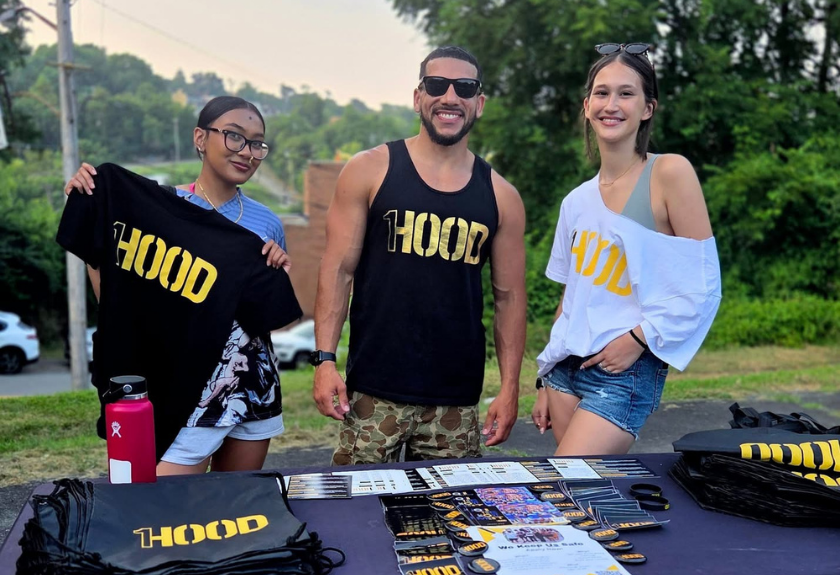
I learned more about myself and the world through arts than any class ever taught me. If I’m being completely honest, more than my parents ever taught me. I’ve been with 1Hood as director of education since 2018; prior to that, I was teaching in a charter school system and the way I’ve seen our young people respond to arts programming gives me so much hope.
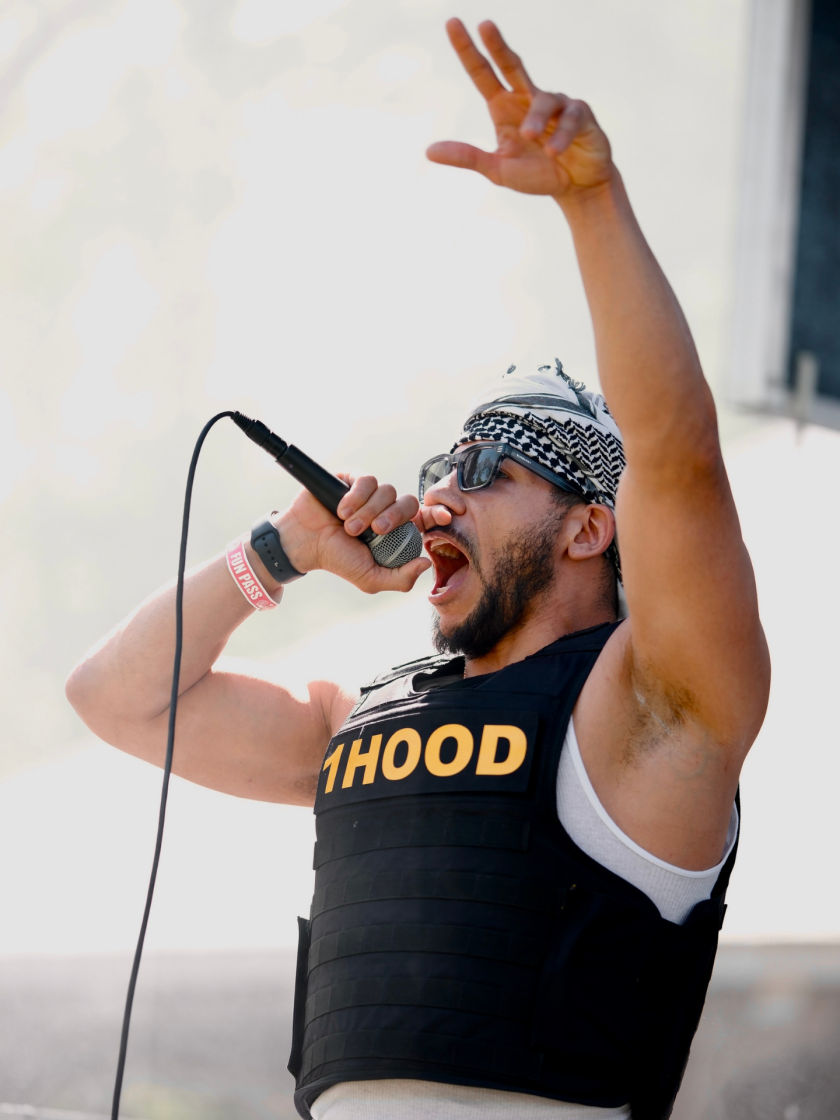
It wasn’t until my mid- to late 20s that I started seeing hip-hop as art, because it had always been a culture to me. Our stories, our community, our language, our fashion: it transcended art because it's what we lived. I didn’t start rapping until my early teens, but the way I consumed the music always gave me a reprieve from my day-to-day life, even when it mirrored what was happening to me. Music gave me language for emotions I couldn’t articulate. It taught me about politics and history. It gave me sarcasm and wit. It funneled the world in my ears.
When I was 6, my mother put me in martial arts classes for my birthday because I got beat up at school. While hip-hop sharpened my mind for literature, politics, and history, karate did that for me physically. Hip-hop gave me communication and critical thinking; martial arts gave me discipline and steadfastness. Martial arts wasn’t just a third space for me, it established a baseline for my physical well being. I found global camaraderie with both rap and karate — some of those friendships have lasted almost 30 years.
I rapped my way through school, through jail, and depression. At 1Hood, a lot of the work we do is direct service, especially with young people. In our programs, we have yutes dealing with mental health issues, their lives impacted by community violence and some embattled with navigating the criminal justice system. I see familiarity in a lot of the youngers who are gravitating towards art in the same way I did because at times, it seems like the only reachable light at the end of the tunnel.
At one of my lowest points in life, a few months after my partner and I lost our daughter, I started going to therapy. My therapist asked me what I did to replenish myself, and I answered honestly. His response caught me entirely off guard. He said, “That sounds like hiding.” I got offended. What about anything I said lent itself to fear? When I explained the processes I was using, I started noticing what he was saying. I was no longer addressing issues and working to heal them; I was using routine to occupy my mind. Nothing restorative was taking place. I was a hamster on a wheel. This forced me to look at how my arts were serving me at this new point in life. What was I not getting? I’ve dealt with death and loss before, but nothing like this.
I’d be lying if I said I fixed the problem right there. I was writing, but nothing complete. One night, I was cycling through beats, and I found the instrumental for what became a song called “Inshallah” on my album, "Revolutionary But Gorgeous." I wrote everything — every single thing. And then I cried. I recorded a week later, and cried after. And that album, specifically that song, gave me an entirely new understanding of how art shows up for me.
Traditionally, 1Hood has been known for our media work through hip-hop and youth engagement. Essentially all of our programming is art-based service. Advocacy can show up in any form, and it doesn’t have to be a textbook definition. Our We Keep Us Safe program has been running for six years and one of our members, Kush Wilkes, was directly impacted by the carceral system. He’s had some awful things happen to him at the hands of correctional officers, and while we’re celebrating his release, he’s using his art and platform as a faculty of restoration and addressing the traumas that jail can impart on you.
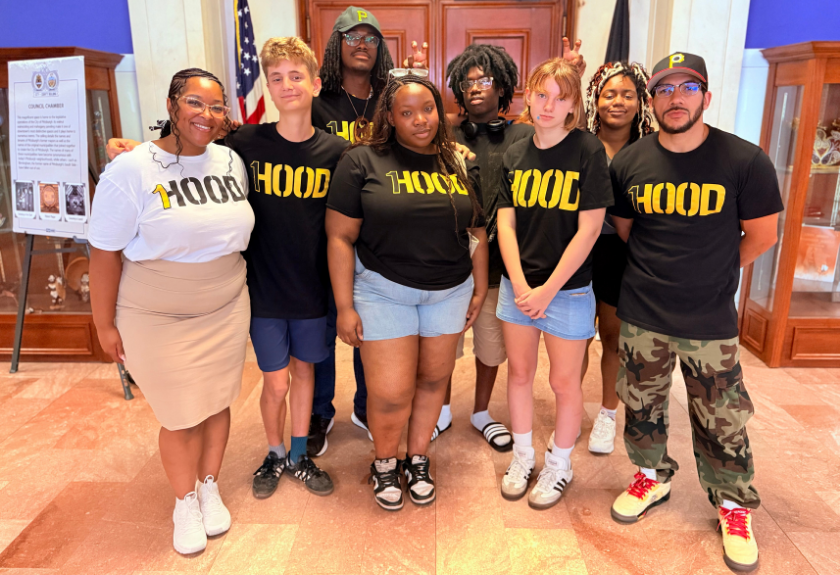
Some of the virality of 1Hood’s profile has brought young people to us, virtually and in person, asking for answers, help, tutelage, direction. That’s a heavy ask at times because sometimes we’re a last resort for them. But it’s also gratifying to know the level of faith our community’s young people have in us.
My entire life was done unorthodox. I treated life like I do video games. I want to do all the side quests before I finish the main campaign; what I do for work is unorthodox. How I teach is unorthodox. Hip-hop is unorthodox. Forget a double standard, we stand to double. When I heard Wu-Tang dropping references to my favorite kung fu and karate films, I thought, why can’t I fight like they rap? A theme ever present in kung fu flicks is style; well, the best style is the one no one can imitate. That’s hip-hop. It's unique to you. As far back as I can remember, I've approached every system through a rapper's lens. How can I challenge and battle this — and ultimately redefine it in a way that’s accessible for those who look and sound like me?
Since I’ve moved to Pittsburgh, I’ve seen the district close down countless schools, re-route buses to seemingly avoid Black people and defund life-saving arts programs. All in exchange for condos, bike lanes, and Black Lives Matter signs conveniently hung once the Black residents were priced out of their own neighborhoods.
People from my generation are all uniquely tethered to art because when we came up, expression wasn’t just what you used to be seen. It was your CV. Your art was your signature. Your style was your legacy. I always was, just not yet. I am my own art. Always a work in progress. And like any artist putting their work on display, as Erykah Badu says, “I’m sensitive about my shit.”
About the Author
Farooq Ameen Al-Said is an award winning, Emmy nominated Artivist from Toronto, Ontario, Canada, residing in Pittsburgh, Pa. He has gone from a once incarcerated individual to K-8 classroom teacher and now serves as Director Of Education for the national Arts & Activism collective, 1Hood Media.
An MC, stage actor and educator, Farooq, has seen success in many creative mediums. After a major label deal and success in the “blog era” of rap, he turned his attention to education and activism. With a pedagogy that sits in the intersection of arts, education and social justice, Farooq has spoken globally, even teaching a course of equity in education at the University of Sydney, Australia. Currently, Farooq is one of the cohosts of the nationally syndicated podcast, “This Week In White Supremacy” which is at the moment one of the most watched political talk shows in the country.
Policy and Action Roundtable
Across the country, health systems, policymakers, and people-centric organizations are turning to social prescribing, connecting people to non-clinical, community-based resources, including the arts, as part of how we support health and well-being. Southwestern Pennsylvania has the ingredients to build something real here: a strong arts ecosystem, engaged health systems, and policymakers ready to listen. On November 4, we are convening a room where we hope to bring those pieces together.
We're bringing together leaders from the arts field, policy, philanthropy, and healthcare to move past the concept and into specifics:
- Where, and in what ways, can social prescribing deliver real impact in our region?
- What could social prescribing mean for our regional arts ecosystem?
- What policy and funding infrastructure needs to be built to support it?
This is the second in the Arts Council's Policy and Action Roundtable series, designed not just as a conversation but as a working session, panel insight, small-group discussion, and shared next steps, so that everyone in the room leaves as a thought partner rather than a spectator.
Policy and Action Roundtable: Social Prescribing in Southwestern Pennsylvania. Wednesday, November 4. 9-11:30 a.m. Manchester Craftsmen’s Guild - MCG Jazz Concert Hall, 1815 Metropolitan St., North Side. $15. Learn more at https://www.pittsburghartscouncil.org/events/social-prescribing.