
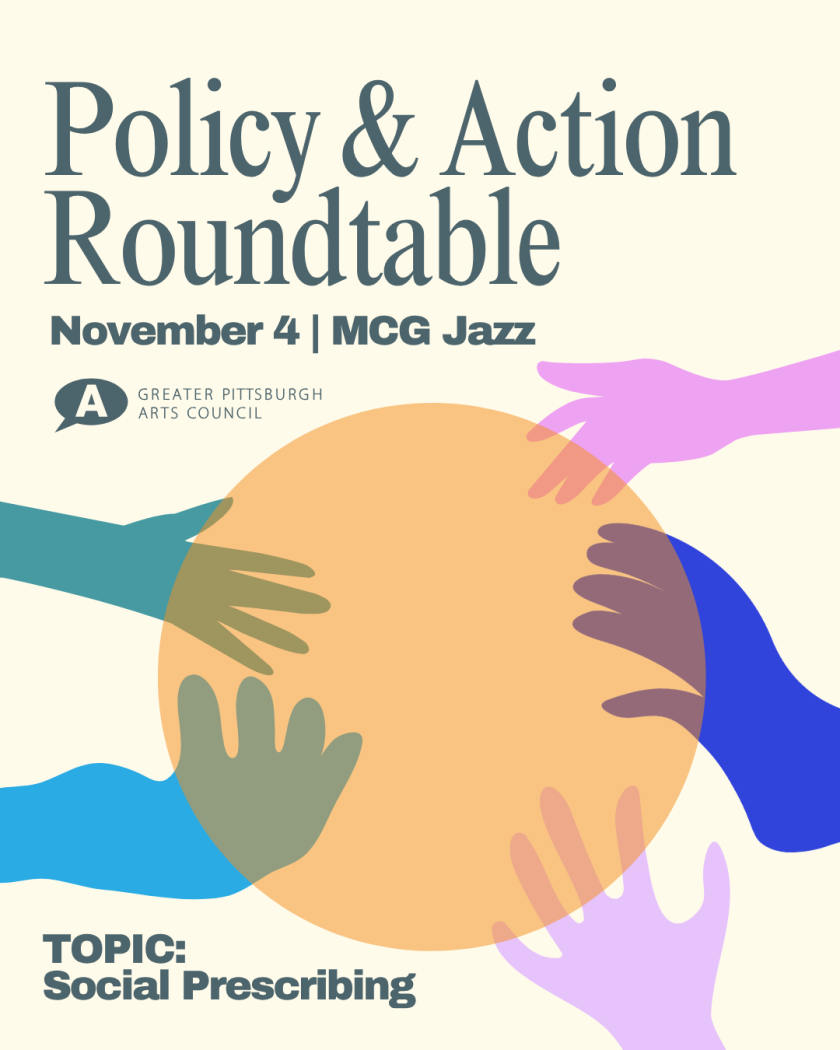
Wednesday, November 4, 20269 - 11:30AM
Manchester Craftsmen's Guild - MCG Jazz Concert Hall (1815 Metropolitan St., North Side)
This event is wheelchair accessible
$15
Across the country, health systems, policymakers, and people-centric organizations are turning to social prescribing, connecting people to non-clinical, community-based resources, including the arts, as part of how we support health and well-being. Southwestern Pennsylvania has the ingredients to build something real here: a strong arts ecosystem, engaged health systems, and policymakers ready to listen. On November 4, we are convening a room where we hope to bring those pieces together.
We're bringing together leaders from the arts field, policy, philanthropy, and healthcare to move past the concept and into specifics:
- Where, and in what ways, can social prescribing deliver real impact in our region?
- What could social prescribing mean for our regional arts ecosystem?
- What policy and funding infrastructure needs to be built to support it?
This is the second in the Arts Council's Policy and Action Roundtable series, designed not just as a conversation but as a working session, panel insight, small-group discussion, and shared next steps, so that everyone in the room leaves as a thought partner rather than a spectator.
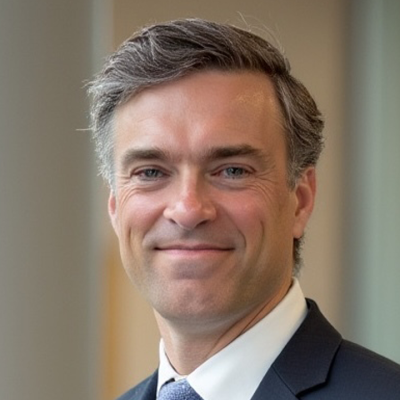
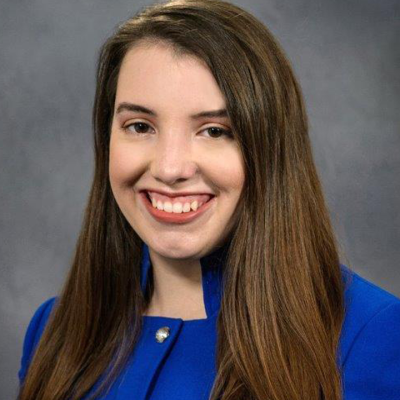
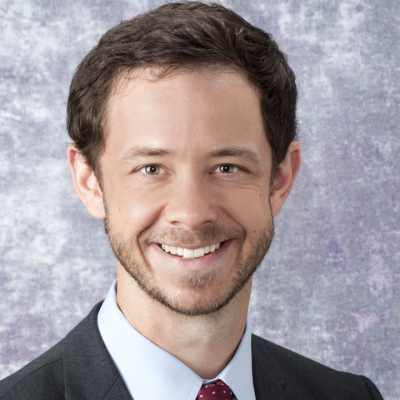
Featured Panelists


What is Social Prescribing?
Social prescribing is a practice that connects people to non-clinical, community-based resources, including the arts, nature, exercise, volunteering, social groups, and more, as a formal part of how their health and well-being are supported. Rather than treating a prescription as limited to medication, a clinician, social worker, or care navigator can "prescribe" a museum membership, a dance class, or a volunteer opportunity, addressing the social and environmental factors that shape health but sit outside what a typical doctor's visit can touch. The approach links individuals, particularly those managing chronic conditions, mental health challenges, or social needs, to non-clinical community-based services meant to improve physical, functional, mental health, and overall well-being. The term originated in the United Kingdom in the 1970s and gained wider adoption through the National Health Service (NHS) Long Term Plan, and it has since spread through Europe, into Canada, and, more recently, the United States.
In England, where the model is most mature, social prescribing referrals exceeded NHS targets of 900,000 patients, with between 1.1 and 1.4 million patients referred in 2023, and the share of referrals reaching people in marginalized communities rose from 23% to 42% between 2017 and 2023. A large-scale 2026 analysis tracking nearly 20,000 UK patients found statistically significant improvements in well-being in the months following a social prescribing referral, including a 3.31-point increase on the Warwick-Edinburgh Mental Wellbeing Scale, a 1.59-point increase in reported happiness, and a 1.45-point decrease in anxiety. A national UK evaluation of social prescribing across 3,339 participants found a social return on investment of £1.88–£2.42 for every £1 spent.
Massachusetts became the first U.S. state to scale social prescribing statewide, building on a six-year pilot with significant evidence that arts-based social prescribing is an effective, cost-effective treatment option. Massachusetts rollout was in partnership with SocialRx.
Ahead of the Policy & Action Roundtable, we're also publishing a series of first-person essays on the importance of arts and culture as a strategy in health and wellness.
Below, we'll share the featured voices as their stories are shared. We invite you to read the series over the next few weeks on our blog at pittsburghartscouncil.org/blog.