
Advocacy |
Policy & Action Roundtable Draws Nearly 200 for Conversation on Arts, Government, and What Comes Next
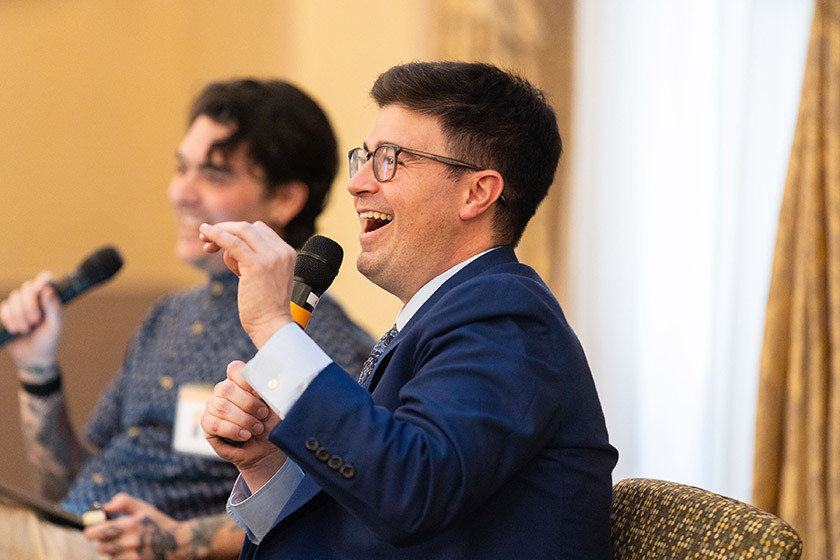
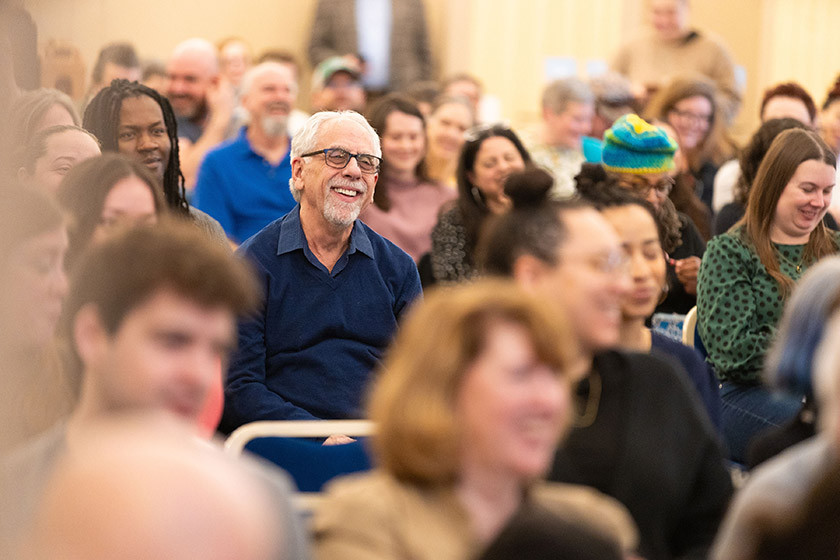
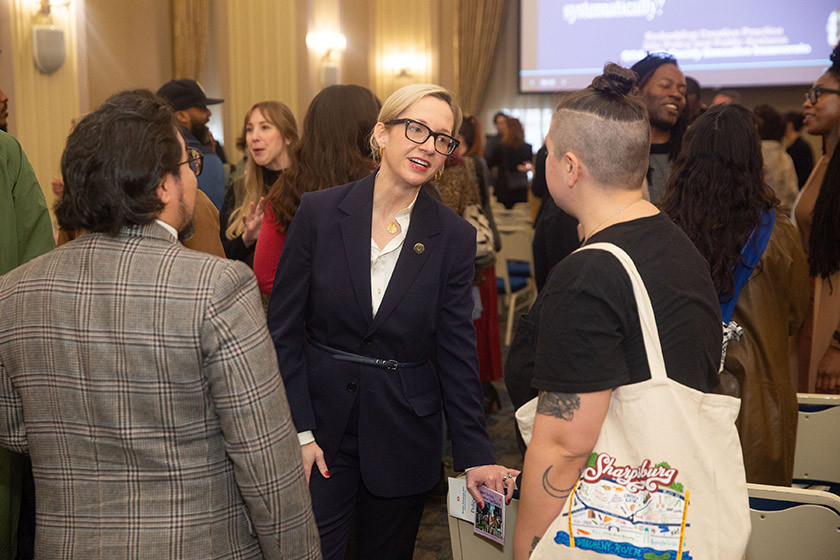
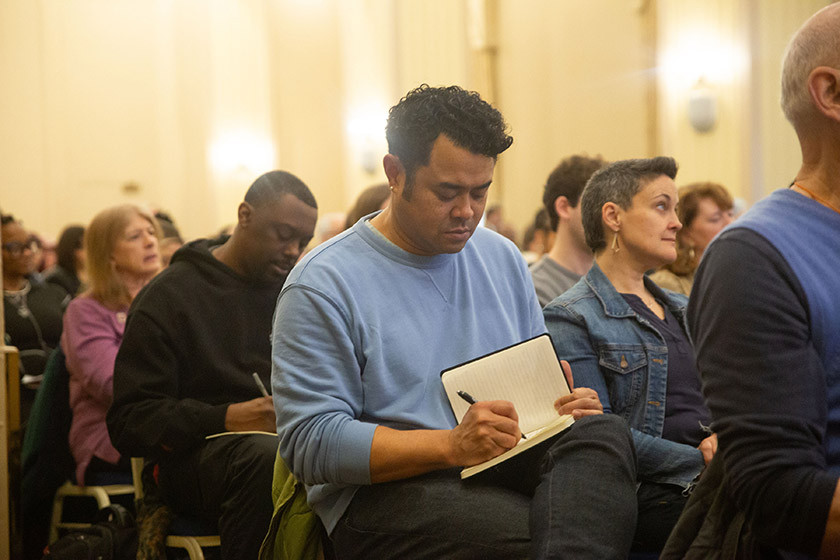
Nearly 200 artists, arts leaders, funders, and arts patrons gathered at Point Park University in Downtown Pittsburgh in early March for the Greater Pittsburgh Arts Council’s inaugural Policy & Action Roundtable, a candid and forward-looking conversation about how local government can better support artists, creative workers, cultural organizations, and the communities they serve.
The event marked the launch of a new ongoing advocacy series from the Arts Council, designed to bring artists, cultural leaders, and public officials together to discuss the policy issues shaping the region’s arts sector.
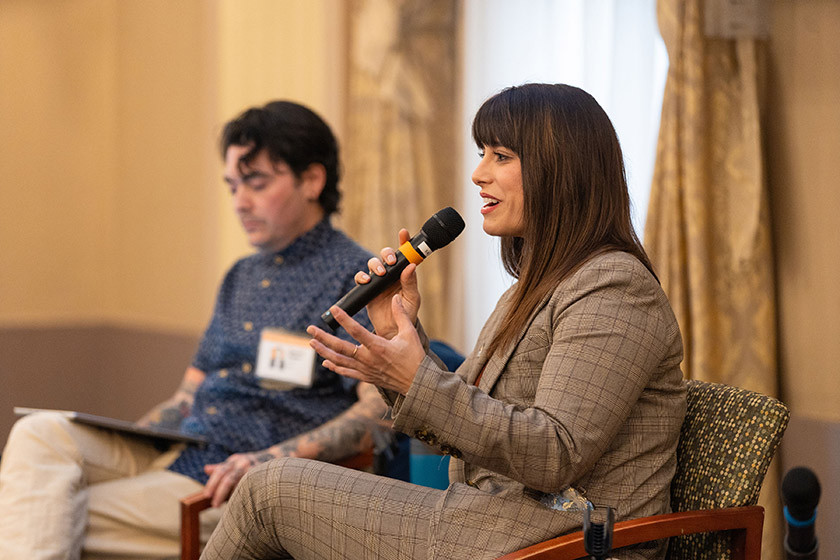
The program featured a Q&A with Pittsburgh Mayor Corey O’Connor and Allegheny County Executive Sara Innamorato. Across the discussion, one message came through clearly: artists and cultural organizations are not on the sidelines of public life. They are essential partners in shaping Pittsburgh and Allegheny County’s future.
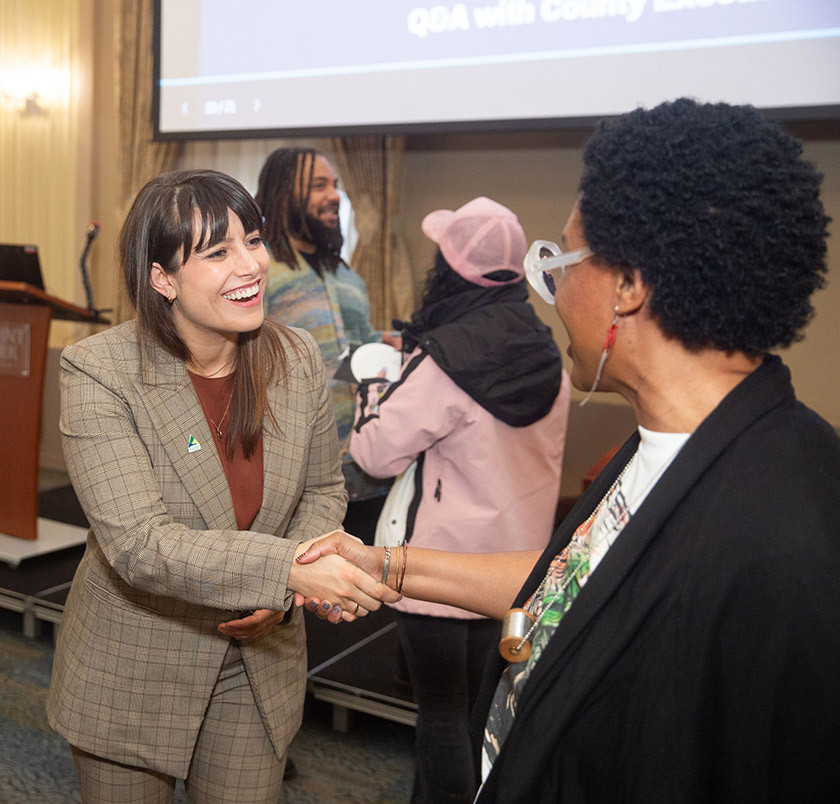
“The large turnout showed how ready this sector is to engage,” says Arts Council CEO Patrick Fisher, who moderated the discussion. “What comes next is the important part: turning this energy into action, building stronger relationships with public leaders, and making sure artists and cultural organizations are included early in planning processes.”
The first half of the program focused largely on the City of Pittsburgh, with Mayor O’Connor responding to questions about public art, creative space activation, permitting, neighborhood development, and how creative perspectives can be included in civic planning. The second half turned to county-level systems and opportunities, as County Executive Innamorato discussed housing, economic development, cultural planning, and the need to embed arts and culture into broader public policy.
The event also drew coverage from local media including Pittsburgh’s Public Source, which reported on the discussion in its story, “At Point Park, Pittsburgh’s arts leaders and policymakers ask: What place does art have in the region’s future?”
Key themes from the discussion
Several themes surfaced again and again throughout the program.
Creative perspectives must be included early, not added at the end.
Both city and county leaders spoke to the importance of bringing artists and arts organizations into planning conversations from the beginning — whether the topic is public infrastructure, neighborhood development, public space, or community revitalization. Too often, art is treated like a final layer rather than a core part of how places are designed and experienced.
Creative spaces need proactive support.
Registrants raised concerns about cultural anchors being priced out, vacant properties sitting unused, and artists struggling to access affordable space. Both Mayor O’Connor and County Executive Innamorato acknowledged the need for more intentional strategies around reusing underutilized buildings, activating storefronts, and preventing the loss of important cultural spaces.
Permitting and government systems remain a major barrier.
One of the clearest points of agreement in the room came around bureaucracy. The Arts Council shared feedback they’ve heard from the region’s arts community on how difficult it can be to navigate permitting, approvals, and city processes — especially for small organizations, independent artists, and pop-up projects. Mayor O’Connor emphasized that streamlining permitting is a priority, especially for smaller-scale creative activity that should not face the same barriers as major development projects.
[Editor’s note: Several days after the event, Mayor O’Connor publicly announced plans for City Permitting Process Reform]
Dedicated cultural leadership can help coordinate arts across government.
Speakers also highlighted the need for stronger coordination inside government so arts and culture can be integrated intentionally across public systems. County Executive Innamorato noted that creative work intersects with many areas of government — from housing and economic development to transportation, infrastructure, and health and human services. Establishing dedicated staff or cultural leadership positions could help coordinate efforts across departments, ensuring arts and culture are embedded in public initiatives and planning processes rather than treated as stand-alone programs.
Housing and affordability affect the arts sector directly.
County Executive Innamorato connected the sustainability of the arts ecosystem to broader issues like housing affordability, wages, and economic stability. Artists do not exist outside those systems. Supporting the arts isn’t just about supporting institutions, it also means supporting the people who make the work and the neighborhoods where creative life takes root.
Arts and culture are public infrastructure — and bring the “cool shit factor.”
A major throughline of the event was the idea that arts and culture are not extras. They are part of what makes neighborhoods vibrant, support local economies, build belonging, and help people imagine a future in their communities. County Executive Sara Innamorato captured that idea candidly during the discussion, describing arts and culture as the region’s “cool shit factor” — the things that make people want to live somewhere, put down roots, and feel connected to their community. Speakers returned often to the role of arts and culture in public life, from downtown vitality to neighborhood pride.
The arts sector can’t carry the burden of funding civic projects alone.
Mayor O’Connor acknowledged that artists and organizations shouldn’t be expected to carry the burden of fundraising alone for projects that benefit the city. “If we are creative, we can help fund it,” he said, noting that if the city is brought in early, his office can help connect projects with potential business partners. But organizers should be prepared to outline the scope and cost of their work so those conversations can happen.
He also noted that the city can often help in practical ways beyond funding — by providing logistical support such as barricades, street closures, or equipment for events through departments like Public Works — and encouraged organizers to share a checklist of needs early so the city can identify resources that might help reduce overhead costs.
Additional Highlights from Mayor Corey O’Connor
In the first section of the program, Mayor O’Connor spoke at length about the role the arts can play in helping Pittsburgh tell a fuller story about itself.
He pointed to opportunities to integrate art into public projects, streetscapes, neighborhood spaces, and vacant parcels, and said artists should feel encouraged to bring forward ideas. He also stressed that the city needs to get better at saying yes to creative uses of space and at making it easier for artists and small organizations to move ideas into action.
A few points stood out in particular:
- There is a need to activate vacant storefronts and underused properties, both downtown and in neighborhoods.
- The city’s rec centers are currently not being utilized after 5 p.m. and he recognized the importance they could hold for “pockets of this city that can’t afford to go to a Broadway show downtown.” He said his office wants to hear from creative individuals and organizations interested in hosting events like gallery shows or performances in these city-owned assets.
- His office is open to rethinking how the city approaches graffiti and street art, expressing an openness to ways the city can shift from purely enforcement-based policies toward approaches that recognize street art as a legitimate form of creative expression. He noted that other cities have created designated “legal walls” where artists can paint freely, and said similar ideas could be explored on city-owned infrastructure such as playgrounds, ball fields, and other public spaces.
- Artists and organizations should bring ideas forward early, especially when cultural anchors or neighborhood spaces may be at risk.
Mayor O’Connor also repeatedly returned to a broader civic argument: Pittsburgh has a stronger story to tell, and arts and culture should be central to that story. He encouraged artists and cultural leaders to engage not only through creative projects, but also through civic leadership by serving on city boards and commissions.
Additional Highlights from County Executive Sara Innamorato
In the second half of the program, County Executive Innamorato widened the lens, focusing on how arts and culture connect to county systems, long-range planning, and quality of life across Allegheny County.
She framed the arts ecosystem not only as an economic driver, but as part of what makes a place livable and worth investing in. She also drew clear connections between support for the arts and other county priorities, including housing, public infrastructure, neighborhood development, and public engagement.
Among her strongest points:
- A countywide cultural plan could help guide funding, policy, and long-term priorities in a more equitable and strategic way.
- The county currently employs creative individuals, including members of their marketing teams and at the Department of Public Works sign shop.
- Artists should be involved in shaping broader public decisions, including planning, development, and infrastructure.
- The county’s new Main Streets program includes support for arts and public space activation, embedding public art and creative placemaking into commercial corridor revitalization efforts.
- Her office is interested in building more accessible, less burdensome public processes, including simpler entry points for grants and funding opportunities.
- There is real value in exploring dedicated cultural leadership within county government to help coordinate this work across departments or form a deeper partnership with the Greater Pittsburgh Arts Council.
She also expressed enthusiasm for ideas like artist residencies connected to county assets and public spaces such as county parks, while noting that a stronger framework and plan would help turn ideas like that into durable policy.
What attendees said matters most
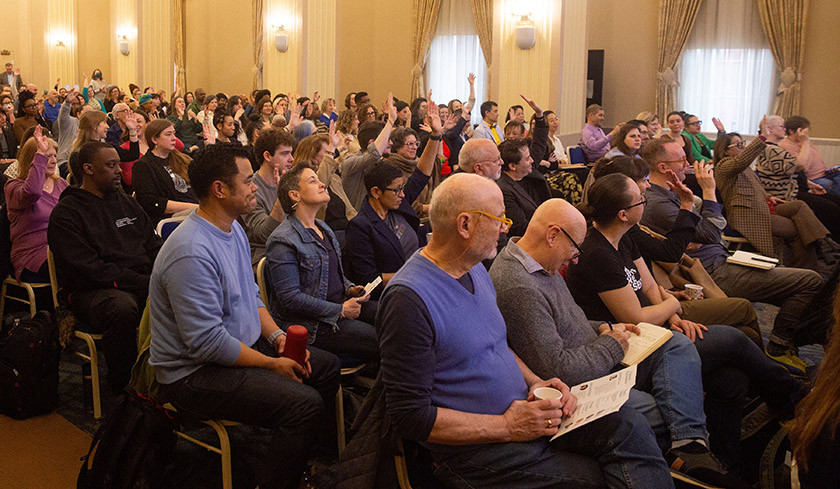
Early in the program, Fisher asked the audience two questions to help frame the conversation. First, he asked how many attendees felt a significant portion of their capacity was being spent navigating uncertainty: trying to interpret shifting conditions, anticipate what comes next, and redefine what sustainability looks like for their practice or organization. A majority of the room raised their hands.
He then asked how many had found it difficult to access or navigate government systems, or felt uncertain whether their engagement with public institutions would lead to meaningful impact. Again, most attendees raised their hands.
“Your responses show something important,” said Fisher. “The challenges we’ll discuss today are not isolated or singular. They are felt broadly, they are interconnected, and they matter to everyone in this room. This is why your voices, and the perspectives of our city and county leaders, are so critical.”
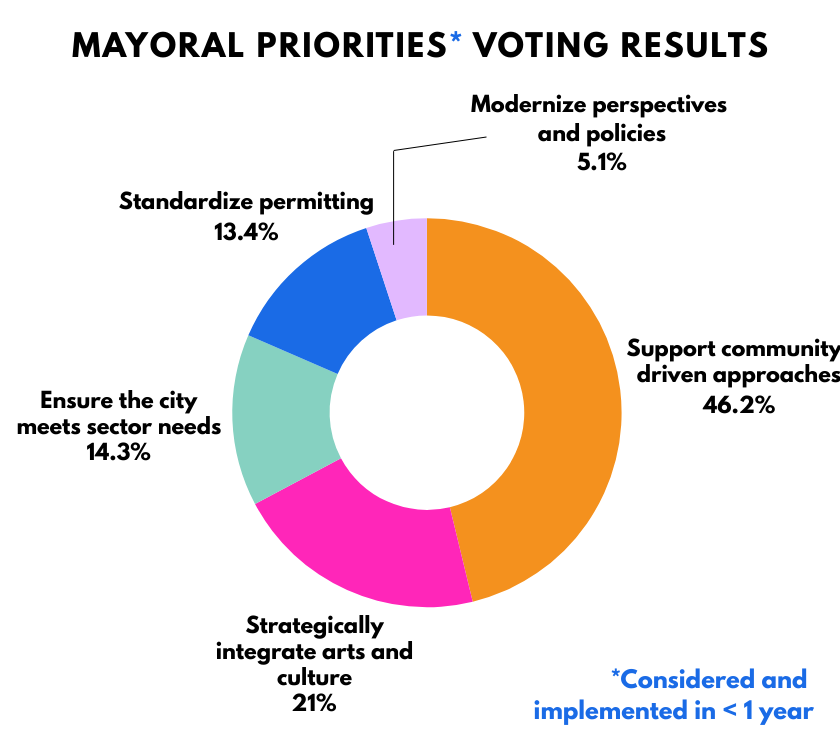
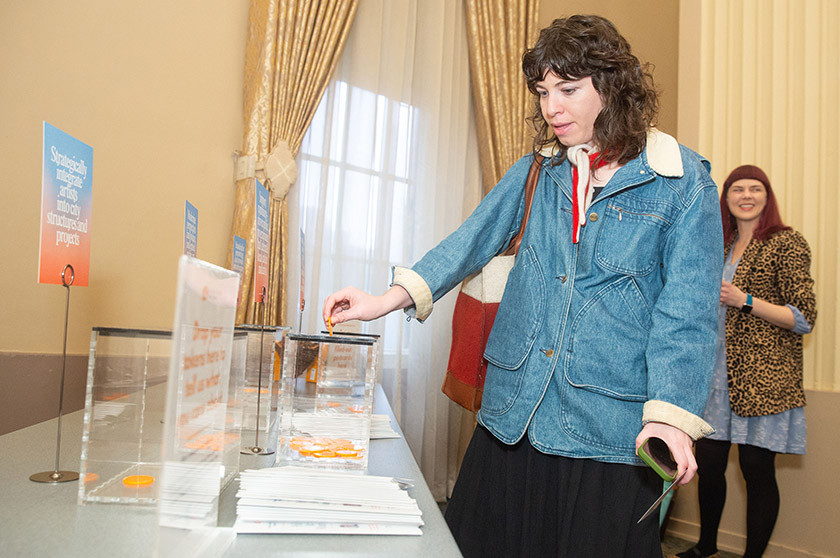
As part of the event, attendees were also presented with five boxes representing the First Year of Mayoral Priorities we developed last year with input from artists, nonprofit leaders, and creative businesses across Pittsburgh:
- Strategically integrate artists into city structures and projects
- Support community-driven public programming that celebrates local culture and artists
- Modernize policies and embed public art across city projects
- Ensure the city meets or exceeds W.A.G.E. standards for artist compensation
- Standardize permitting and provide infrastructure support for public art and events
Attendees were then asked to place a token in the box that reflects the priority they most aligned with as a quick, visual way for us to understand what matters most to the people in the room.
The majority of votes were placed for supporting community-driven public programming that celebrates local culture and artists, followed by strategically integrating artists into city structures and projects. These results reinforce what the discussion made plain: people are looking for systems that are more collaborative, more transparent, and more responsive to the realities of cultural work.
Ways to take action
The Roundtable was designed not only to surface challenges, but to point toward next steps. Based on the discussion, arts organizations, artists, and community members can take action by:
- Bring project ideas forward early to city and county staff. Share concepts before decisions are finalized so public leaders can help connect you to resources, potential partners, or funding opportunities.
- Tap the Arts Council as a thought partner. If you’re developing a project or proposal, the Greater Pittsburgh Arts Council can provide guidance, feedback, or advocacy support as you engage with the city or county.
- Stay engaged with municipal processes. Attend city and county council meetings, follow agendas, and read meeting minutes to stay up-to-date on local issues, policy changes, and new developments. Being informed allows you to anticipate opportunities, provide timely input, and ensure arts and culture are considered from the start.
- Apply for boards, commissions, and advisory opportunities. These positions provide a platform to influence decisions, shape policy, and advocate for the arts in civic spaces.
- Share examples from other municipalities. If you’ve seen innovative or successful arts policies in other cities, bring them forward. Both the City of Pittsburgh and Allegheny County have expressed openness to learning from other regions and exploring unrealized opportunities.
- Identify and alert about threatened cultural spaces. Early warnings about spaces at risk of redevelopment or closure allow leaders to intervene and protect important community assets.
- Organize collectively around shared priorities. Look for intersections with other industries and community issues. Building coalitions across sectors can create broader support and more powerful leverage to bring meaningful change.
The event also made clear that government action will matter most when it is paired with sustained follow-through, sector input, and clear points of access.
City of Pittsburgh Contacts
Mary McKinney Flaherty
Deputy Director of Economic Development, City of Pittsburgh
Mary.McKinney@pittsburghpa.gov
Why to reach out:
- First point of contact for development and economic conversations
- Can help direct artists and organizations to the right department
- Especially useful when:
- Cultural spaces may be at risk
- Development could impact a neighborhood cultural anchor
- Artists want to discuss activating space or collaborating with the city
Context from the discussion:
Mayor O’Connor said his office wants to hear about potential issues early, especially when buildings or spaces important to the arts might be sold or redeveloped.
Matt Singer
Deputy Chief of Staff to the Mayor, City of Pittsburgh
matt.singer@pittsburghpa.gov
Why to reach out:
- For appointments to boards and commissions
- If artists or arts leaders want to serve in a public role
- To submit resumes or nominations for city advisory bodies
Allegheny County Contacts
Ernest Rajakone
Deputy Chief of Staff
Phone: 412-350-6508
Mobile: 412-735-3422
Contact Form
Why to reach out:
- To express interest in serving on county boards or commissions, including Allegheny Regional Asset District (RAD), which provided opening remarks
- To learn about appointments and advisory roles within county government
Lauren Connelly
Director, Allegheny County Economic Development
lauren.connelly@alleghenycounty.us
Why to reach out:
- For information about the county comprehensive plan update
- To get involved in public engagement around county planning
- To ensure arts and culture are represented in the county’s long-term planning process
Michael Carroll
Public Information Officer for Economic Development
Michael.Carroll@alleghenycounty.us
Why to reach out:
- To sign up for updates and engagement opportunities related to the county comprehensive plan
- For information about public meetings, planning processes, and participation
Other Pathways Mentioned
Pittsburgh Public Art & Civic Design Commission
Info on the Commission
Public Art & Civic Design Commission Application
Why to engage:
- Formal venue for public art and creative project approvals
- Opportunity to present ideas or projects
- Artists can also apply to serve on the commission
Urban Redevelopment Authority (URA)
Info on the URA
inforequest@ura.org
Why to engage:
- Relevant for storefront activations
- Creative space development
- capital projects involving arts spaces or neighborhood redevelopment