
Demystifying the Arts |
On Vision and Creation
Recently, I’ve been reflecting on the relationship between vision and creation. Last month, across Pittsburgh and beyond, I encountered artists, organizations, and events that transform ideas into tangible experiences, showing how imagination meets action to shape culture, community, and public space. September offered a powerful reminder that creativity is not only about dreaming boldly but also about realizing those dreams in ways that can be shared.
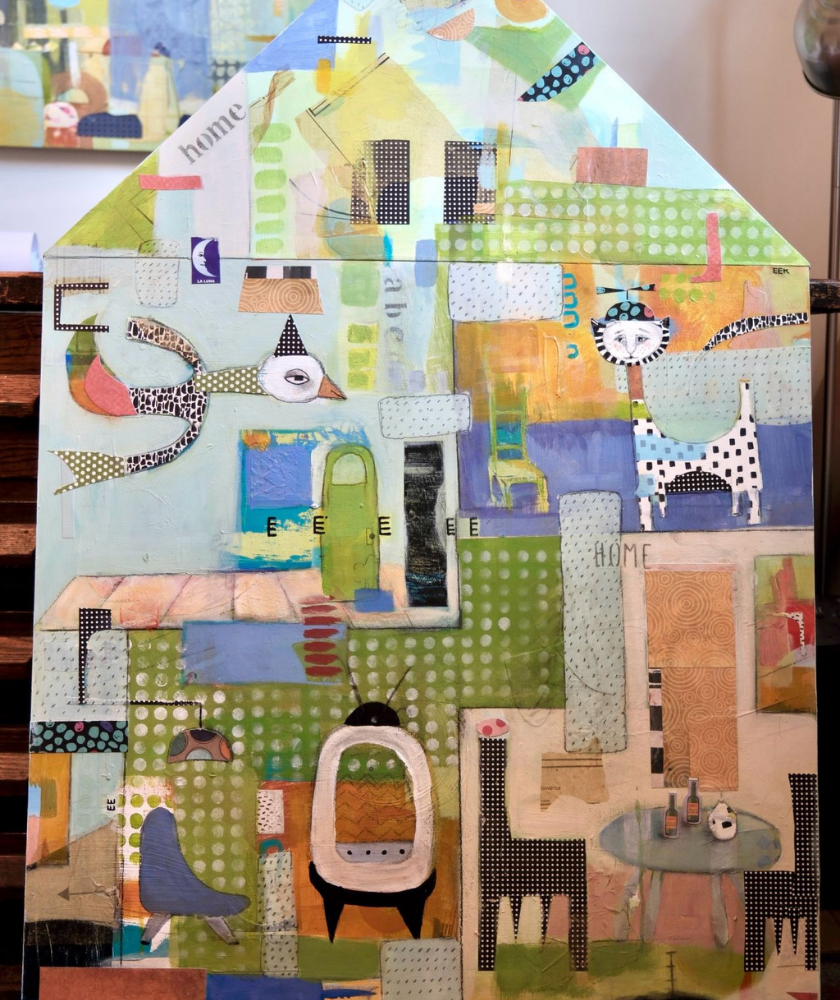
On September 3, I visited the studio of Jody Shell. Her collage practice reflects a balance of vision and creation: she layers memory, material, and improvisation to build textured, evocative surfaces. Each piece is a dialogue between concept and making, demonstrating how creative ideas are shaped and refined through experimentation and hands-on engagement.
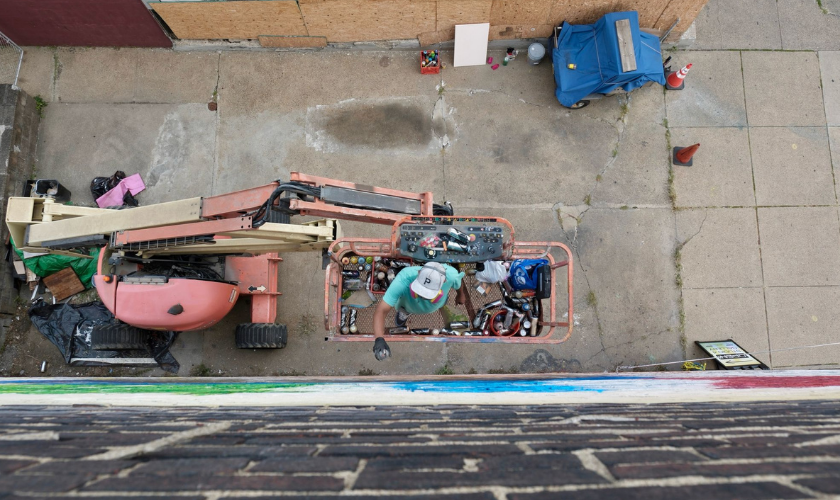
On September 5, Bloomfield’s Studio 4 became the canvas for a new mural by Roberto Seminario (Sef), curated by Steel Town Walls. Sef’s work blends realism, graffiti, and whimsical imagery to celebrate youth and urban life. His vision, bringing color, playfulness, and narrative to public space, becomes tangible through meticulous creation, transforming an ordinatory wall into a destination.
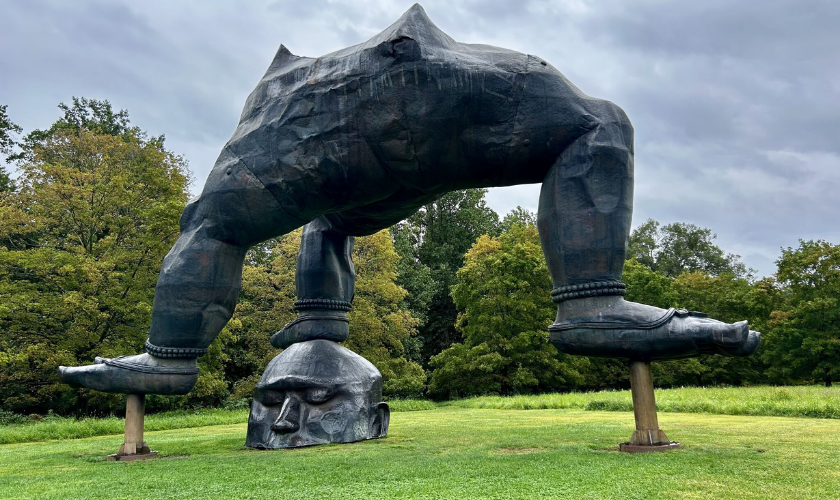
September 7 took me to the Hudson Valley to attend an intensive with the Center for Artistic Activism, and gave me the excuse to visit Storm King Art Center, something I’ve long anticipated. Walking among monumental outdoor sculptures, I was struck by how large-scale vision is realized through creation. Storm King was an early inspiration for Carol Brown when she advocated for a sculpture garden in Allegheny County. It’s easy to understand why: the expansive site, where art interacts with rolling hills, meadows, and forests, shows how vision and place can merge to create something transformative.
Experiencing Storm King firsthand helped me see the imprint it left on Carol, and it also sparked my own thinking about how her work at Hartwood Acres could be driven even further with the right resources. Each sculpture at Storm King reminded me of what’s possible when communities support artists in achieving their aspirations.
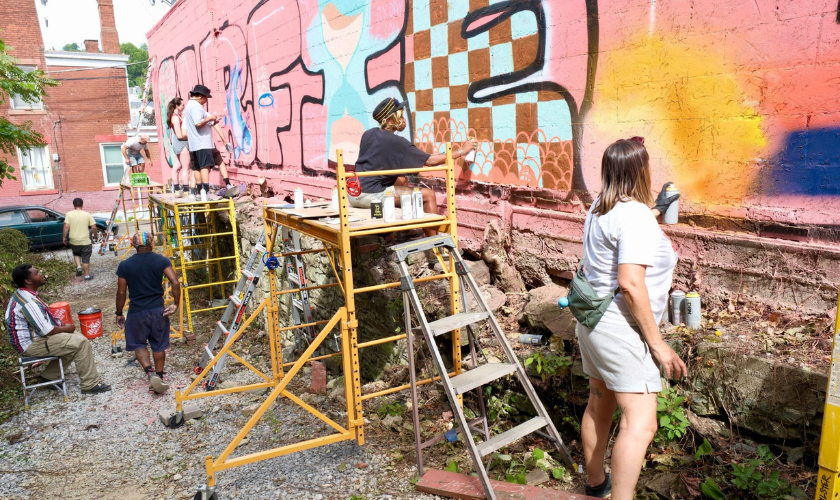
Back in Pittsburgh, Hemispheric Conversations: Urban Art Project hosted the Community Paint Jam on September 13–14. Visiting artists from the Philippines and Spain worked alongside local emerging talent to create striking murals on Penn Avenue. Here, vision met creation in real time: design, collaboration, and hands-on painting turned ideas into public artwork that engages both community and culture.
On September 14, I attended the 11th annual Four Chord Music Festival, an event that continues to grow in scale, ambition, and impact. What began at Club Zoo in Pittsburgh’s Strip District has evolved into a massive festival drawing thousands of music fans to EQT Park in Washington County.
This year’s lineup was stacked: Saturday featured Blink-182 and Jimmy Eat World, while Sunday brought Alkaline Trio, Jawbreaker, and AFI. Experiencing the festival in 2025 as a 40-year-old, with the same excitement I felt for these bands when I was 15, reminded me how festivals like Four Chord can be intergenerational.
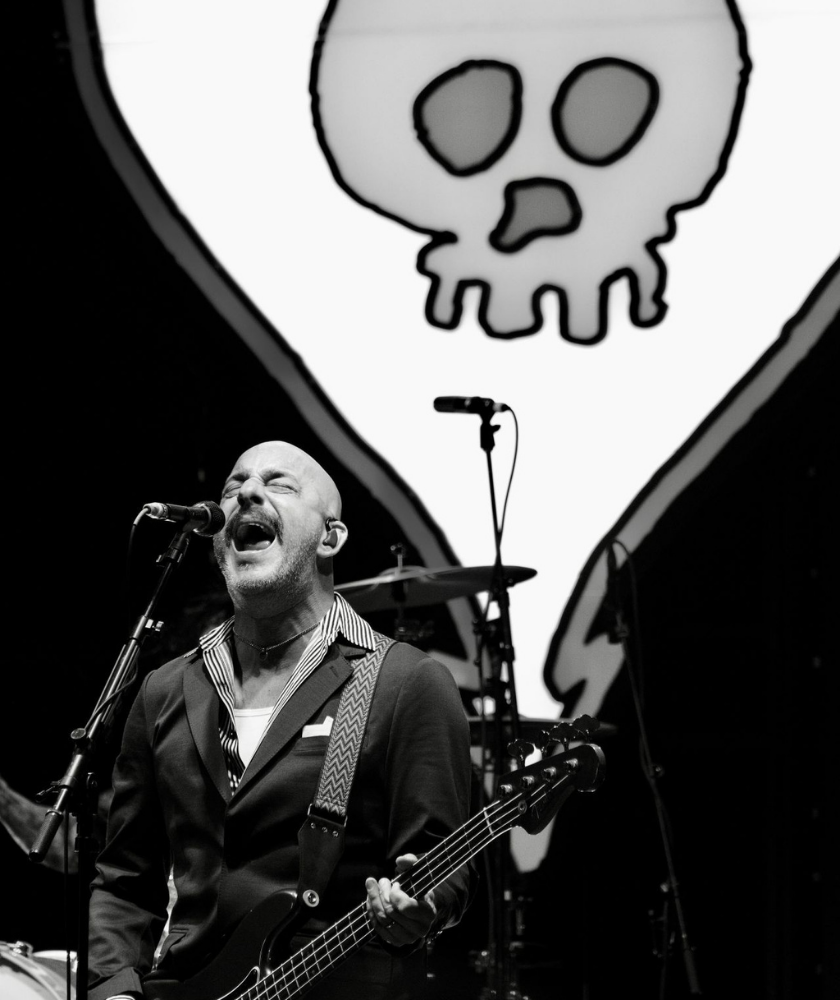
Rishi Bahl, the vision behind Four Chord, has created more than just a festival for his favorite bands to play in Southwestern Pennsylvania. He has created a festival that rivals events in other music hubs and draws people from across the United States. Achieving that has required enormous creativity, planning, and persistence. From curating a lineup that balances nostalgia and contemporary relevance, to managing logistics for thousands of attendees, Rishi has scaled Four Chord while maintaining the independent spirit and community energy that made it special from the start.
The festival exemplifies vision and creation in action: an ambitious idea realized through dedication, skill, and an understanding of what fans and artists alike want to experience. The influx of attendees provides a meaningful cultural and economic impact for Washington County and the surrounding region, while also affirming that Southwestern Pennsylvania can host large-scale, nationally significant cultural events.
On September 18, the Arts Council hosted a gathering for friends and supporters at the Troy Hill Art Houses. Each house is an immersive artwork, shaped by the vision of an individual artist. The creations of Thorsten Brinkmann, Robert Kusmirowski, Lenka Clayton and Phillip Andrew Lewis, and Mark Dion transform ordinary domestic spaces into multi-sensory experiences, offering audiences a new way to see, explore, and engage.
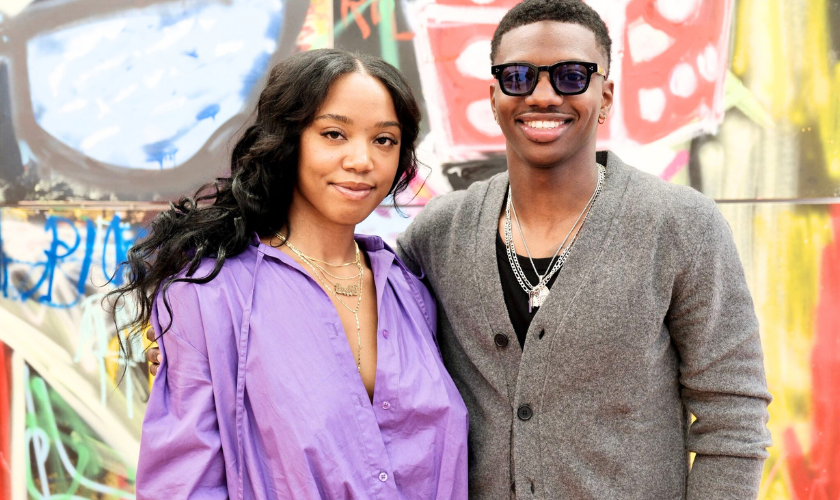
That same day, 4Arts hosted an exhibition at Atithi Studios. Led by Ja’Juan Hill and Jade Ely, the exhibition paired fashion with visual art and connected urban culture with creative expression. Participating artists Thomas Mosley, Saroyah Johnson, CABANA, Griffin Wilson, and Jordan Bigelow demonstrated that visionary ideas can be realized through thoughtful creation, challenging assumptions and affirming Pittsburgh as a city where ambitious projects can take shape.
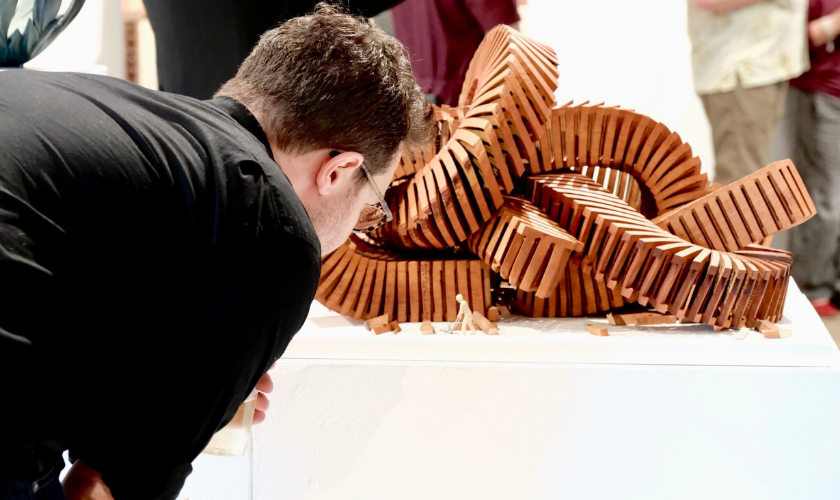
On September 19, Contemporary Craft opened Transformation 12: Contemporary Works in Wood. Nineteen participating artists show how conceptual innovation and technical mastery combine. Each piece embodies vision made tangible: material, technique, and imagination converging to expand the possibilities of craft.
Finally, on September 26, Sonido Gallo Negro performed at Spirit in Upper Lawrenceville, blending Mexican cumbia, psychedelic sounds, and live illustrations by band member Dr. Alderete. The performance exemplified vision and creation in action, merging music, visuals, and audience engagement into a cohesive experience.
September reminded me that creation is where vision finds form. Across studios, streets, parks, and stages, artists and organizations translated imagination into reality, demonstrating that creativity is always both thinking and making, dreaming and doing.