
OP-ED |
Arts Coverage Is Essential to Local Media’s Future
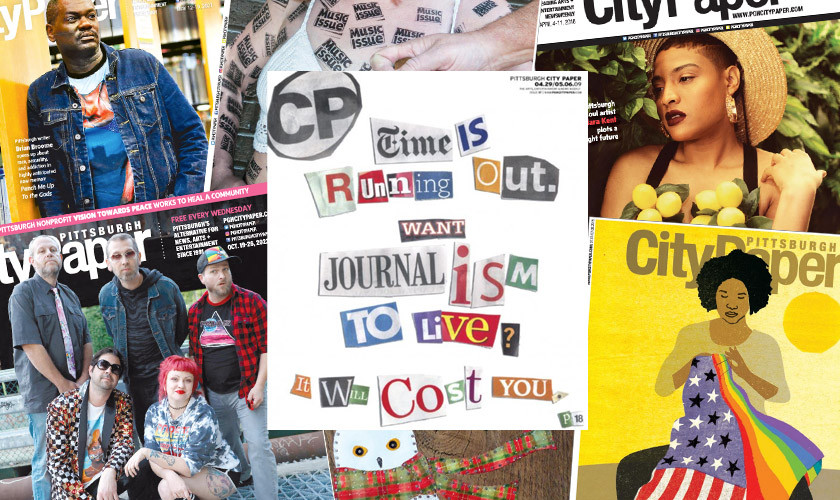
The recent closing of Pittsburgh City Paper and the impending closure of the Pittsburgh Post-Gazette have prompted necessary conversations about the future of local media. But as a former City Paper editor who spent years deciding which stories got told — and who now works at an arts nonprofit helping artists and arts organizations be seen — I have a unique view into the impact of these losses and what’s missing from the conversation: the growing vulnerability of arts coverage after years of steady decline.
When I first started working in journalism decades ago, arts coverage looked very different. Cover stories often ran thousands of words, creating space for deep arts reporting alongside hard news. Weekly movie reviews, arts previews, and performance criticism treated the arts as part of the regular news cycle, not an occasional feature. Arts and culture ads supported that work, and event listings were often the primary way people learned what was happening in the city.
Over the years, artists told me again and again how much arts coverage mattered to them — musicians whose careers were boosted after a cover story, photographers and illustrators brought in to help tell those stories visually, and creatives who felt seen for the first time.
That ecosystem didn’t collapse all at once. Over the past few decades, arts coverage declined gradually, as platforms like Craigslist and later social media changed how people sought information and how advertising dollars moved. Then the pandemic hit, accelerating losses already underway. Staff sizes — and page counts — continued to shrink. And, in many outlets, arts coverage took the biggest hit.
Arts coverage is often treated as optional, something to be scaled back when resources are tight. But at a moment when the arts themselves are facing federal funding cuts and the rollback of important equity initiatives — while organizations are still working to rebuild audiences to pre-pandemic levels — coverage feels more needed than ever. This matters not just for artists and organizations seeking exposure, but for the community, which loses chances to know what’s happening, show up, and take part. In the Arts Council’s 2024 Artist Community Survey Report, artists themselves named promotion and visibility as one of the biggest barriers to advancing their careers.
In the years since I transitioned from a newsroom into an arts communications role, I’ve seen how the absence of consistent arts coverage affects our community — in part because artists and organizations increasingly come to me with their questions, concerns, and stories, unsure who else is listening. Artists and executive directors alike describe uncertainty about where to pitch their work or whether anyone is still assigned to receive it. Emails go unanswered. I’ve heard from artists, arts leaders, and community members: many gave up on local media years ago. I open media newsletters myself each morning and often see the same stories repeated, not because nothing else is happening, but because newsrooms have fewer reporters and editors consistently seeking out untold stories.
Other outlets are helping fill some of the gaps. OnStage Pittsburgh and Petrichor both publish thoughtful theater coverage and arts criticism not found elsewhere, but largely through volunteer labor. Media organizations like Pittsburgh Latino Magazine, Soul Pitt, and 1Hood Media amplify creative work within communities that have historically been undercovered or overlooked. Pittsburgh’s Public Source has expanded how arts stories are told through impactful first-person essays.
At the same time, many talented writers are navigating a landscape with fewer full-time journalism jobs and more freelance work, often without the time or support needed for sustained arts reporting. As a result, important stories still go untold, and significant gaps remain.
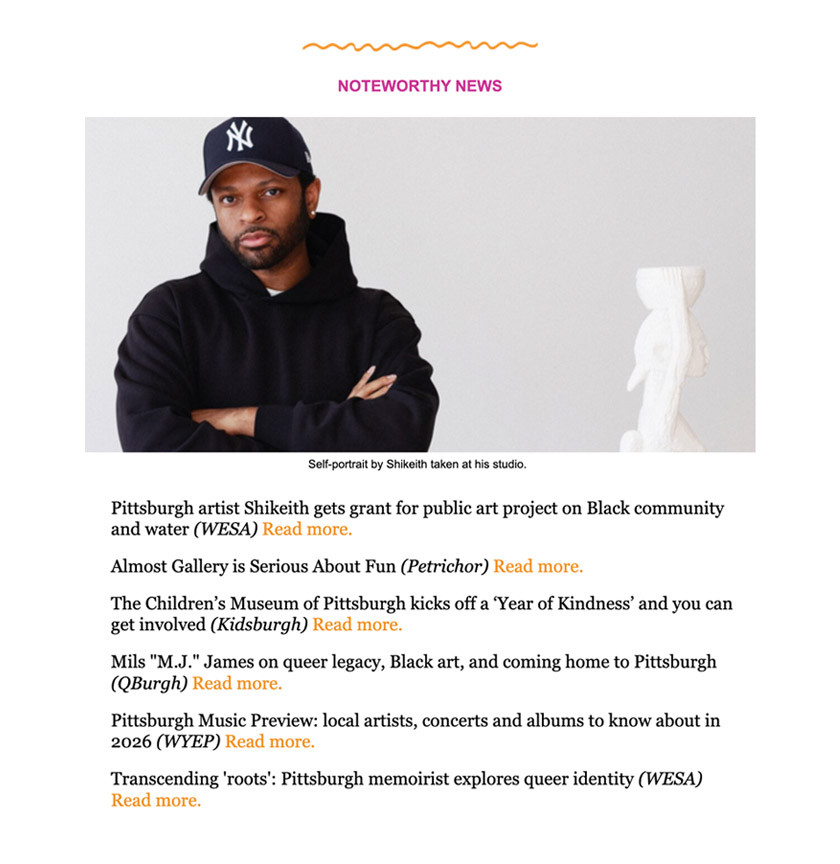
In my current role at the Greater Pittsburgh Arts Council, that reality has shaped how we respond through our own communications platforms. After seeing major gaps in existing event calendars, we built and continue to maintain one of the region’s most inclusive weekly events roundups, a free resource for arts organizations to share their work and for the community to discover events across the region. We also recently launched Artsburgh, a free weekly arts and culture newsletter that lifts up the reporting that still exists and points people toward creative work and events happening across the region.
Across the arts sector and beyond, creative individuals and organizations are increasingly being asked to act like their own media outlets — building newsletters, social channels, and content platforms not as campaigns, but as ongoing infrastructure. This shift reflects real gaps in how stories get told and shared. But it also comes with limits.
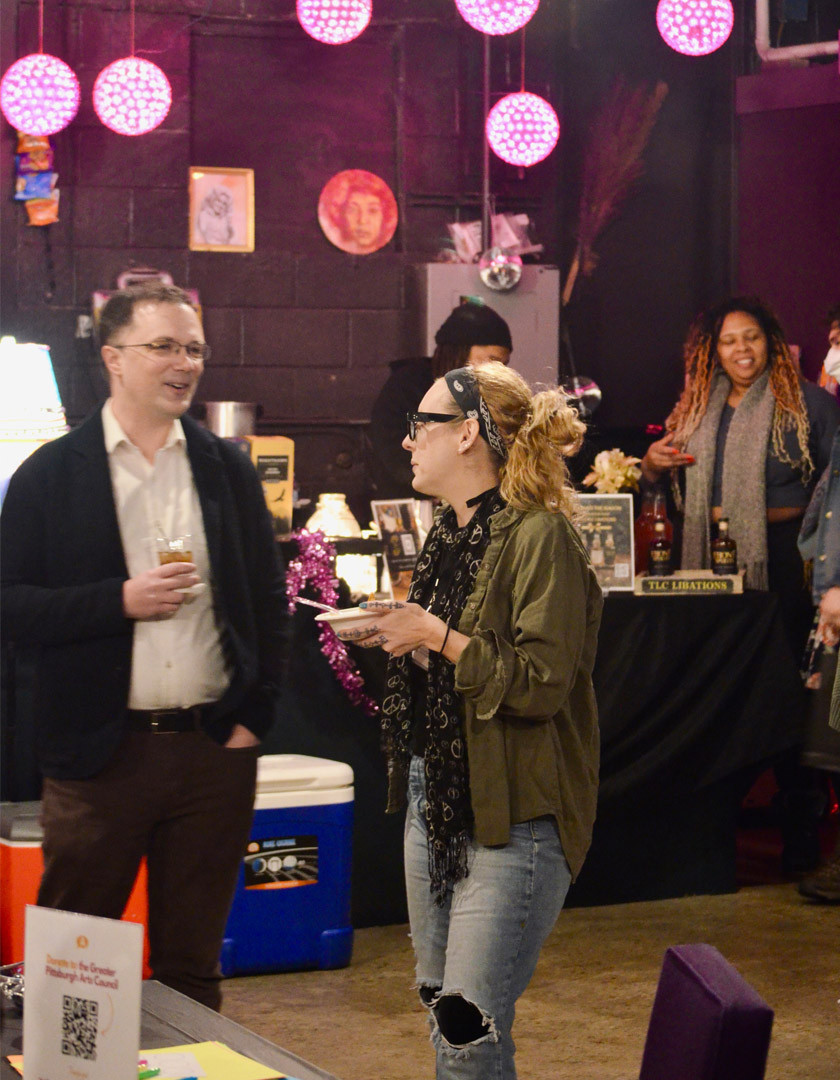
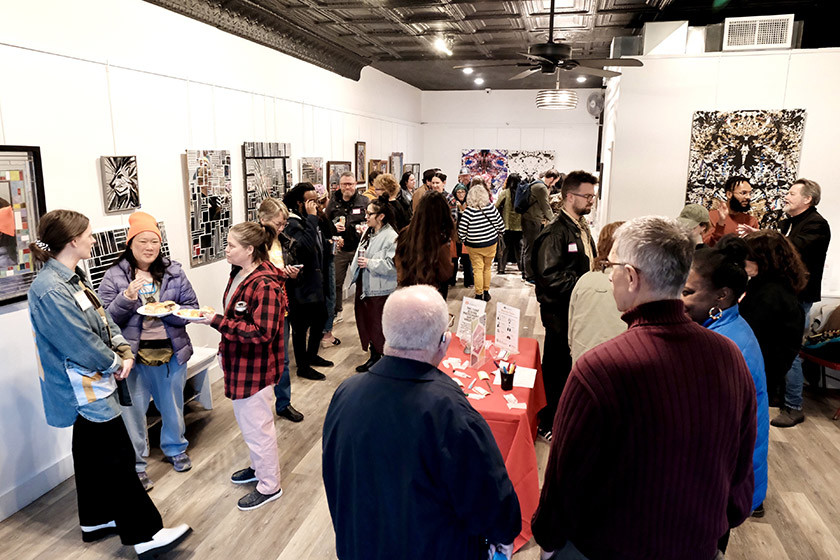
Nonprofits like the Arts Council cannot fill the void left by the loss of arts journalism. We face our own funding cuts, small teams, and limited resources. What we can do is serve as a connector: amplifying work already underway, sharing story ideas, and supporting media outlets that are open to listening. I encourage media outlets to use our weekly events roundups as a guide to what’s happening, to show up at our monthly Creative Hive arts networking events and hear directly from artists and organizations, and to reach out to our team when they’re looking for story ideas or introductions to people whose work often goes unseen.
As conversations turn toward what might come next — including speculation about new publications or the return of familiar outlets — it’s worth being clear about what arts coverage actually requires. It takes time, attention, and enough dedicated staff to cover creative work with care, curiosity, and consistency. Funders also play a critical role in shaping what’s possible. When funders invest equitably in organizations already doing this work — and support long-term reporting capacity rather than short-term partnerships — coverage can expand, new reporters can be trained, and the local media landscape can be strengthened instead of further fragmented.
This moment calls for empathy: for journalists navigating shrinking resources, for artists struggling to be seen, and for audiences actively searching for local arts, events, and creative work to support. It also calls for clarity. Arts stories are everywhere. They haven’t gone away. What’s disappearing is the infrastructure that allows someone to notice them and take them seriously enough to tell them well.
About the Author
Lisa Cunningham is the former Editor in Chief at Pittsburgh City Paper, where she also served as Art Director of the altweekly publication for over a decade. She has worked for the Greater Pittsburgh Arts Council since February 2023, where she currently serves as the Director of Marketing and Communications.