
Stories of Transitions and Thresholds
August always feels like a month balanced between two worlds, one foot in the warmth and ease of summer, the other stepping into the rhythms of fall. Households prepare for the return to school, the city reawakens with the influx of college students, and the first subtle hints of cooler air in the mornings remind us that change is near. It’s a season of thresholds, where endings and beginnings overlap, and where both anticipation and reflection coexist.
Transition, in many ways, is what gives art, and community life, its vitality. It asks us to reconsider what we hold onto and what we’re willing to release. Transition creates space for new identities to take shape, for dormant places to find renewed purpose, and for people to reimagine themselves through practice, collaboration, and expression. In this month’s column, each encounter with artists and organizations illuminated a different kind of transition, personal, communal, or structural, and reminded me that change, while often uncertain, is also the ground where growth and creativity take root.
On August 2, the International Sculpture Center opened its new Pittsburgh exhibition space with SOFT Launch, a juried show presented in conjunction with Fiberart International. By featuring sculpture made from flexible, non-rigid materials, the exhibition challenges traditional understandings of the medium. For ISC, an organization that relocated to Pittsburgh from New Jersey earlier this year, this marks an important transition into a new home and new opportunities to engage the public here in Southwestern Pennsylvania and across the Appalachian region.
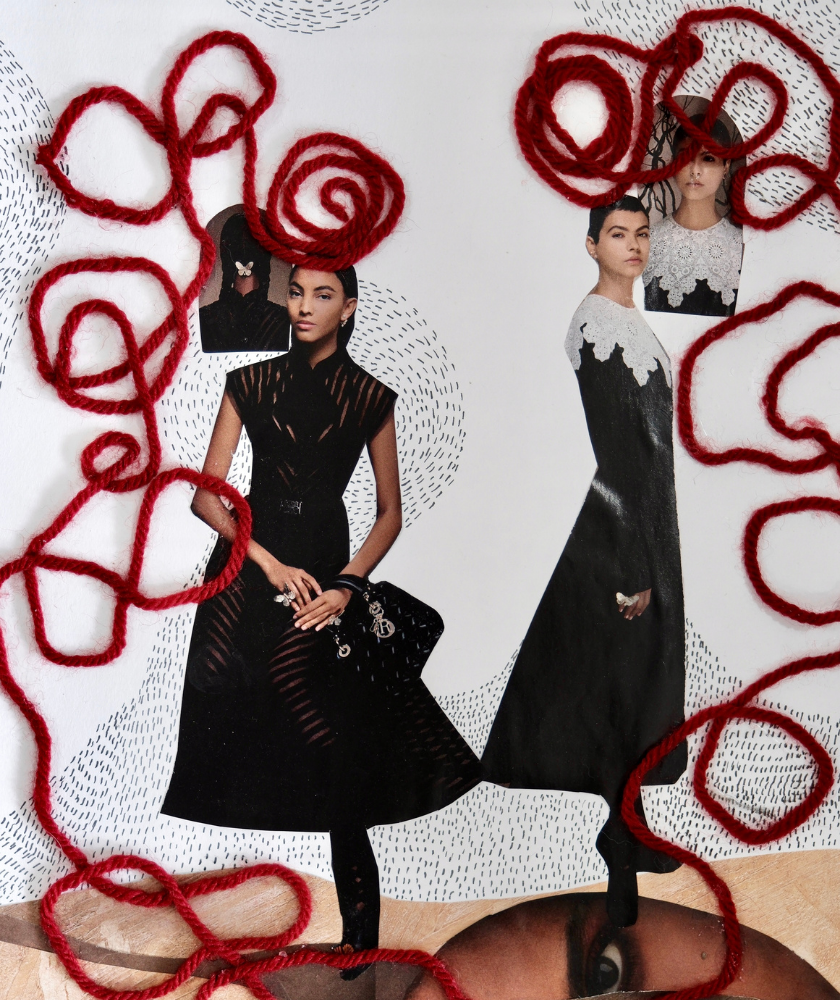
On August 5, I visited the home studio of Deborah Lieberman, who was preparing for an exhibition that opened on September 5 at the Irma Freeman Center for Imagination. This past year has been one of major transitions for her: a new job at Falk Laboratory School, a new home, evolving caregiving responsibilities, and a new dog. To reconnect with her creative practice, she set herself the ambitious challenge of creating 1,000 micro collages. As she neared completion, Deborah reflected on what comes next for her practice and how her work should exist in the world.
On August 7, the Tomayko Foundation opened I Believe I Know, an exhibition featuring artists Sobia Ahmad, Maggie Bjorklund, Centa Schumacher, and Elijah Burgher. The show explores synchronicities between myth, cosmos, and science, offering a lens into the ongoing transitions between human understanding and the divine.
On August 9, I attended an intimate exhibition and artist talk with Chilean artist Tomás Ives. His work blends surrealistic, zoomorphic figures with influences from subculture music scenes and pre-Columbian iconography, but what struck me most was the way his art navigates transition on both personal and social levels. Over the past five years, Tomás has worked in Haitian squatter settlements in Chile, communities formed by refugees who arrived in the country on the heels of political turmoil and economic uncertainty. Through collaborative public art, he has helped residents articulate and claim their identity, using creative practice as a bridge between displacement and belonging.
This commitment to supporting communities in moments of flux underscores the transformative role of art in times of upheaval and the roles artists can play in helping others move from instability to self-recognition.
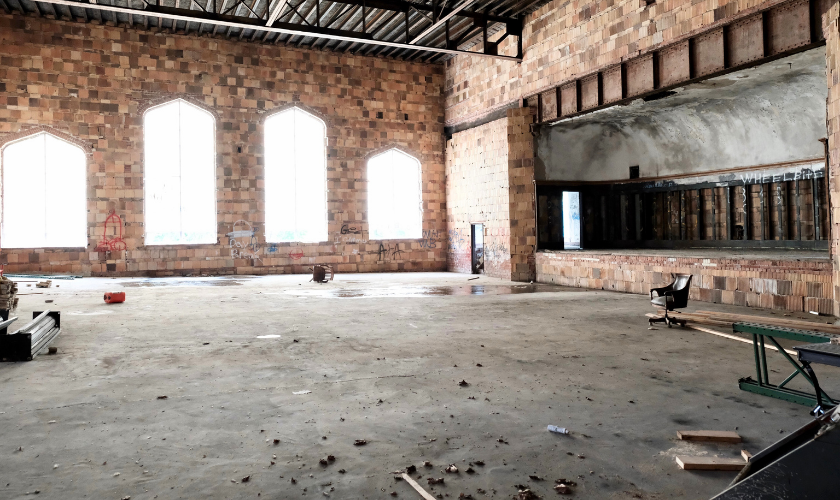
On August 13, the McKees Rocks Community Development Corporation invited me to tour the long-vacant Miles Bryan Junior High School. Empty since the 1990s, the building is now under consideration for adaptive reuse as artist housing and creative studios. The CDC views the project as a way to spark broader community revitalization, much as they did with the Roxian Theatre. Once a shuttered and deteriorating building, the Roxian was stabilized and repositioned by the CDC, which helped secure both a buyer and the necessary investment to bring the project back to life. Today it’s a thriving venue that draws audiences and artists from across the nation, a true anchor for McKees Rocks’ creative and economic renewal.
Transitioning the old school into an arts hub could offer a similar opportunity, breathing new life into a dormant structure while moving the community itself forward.
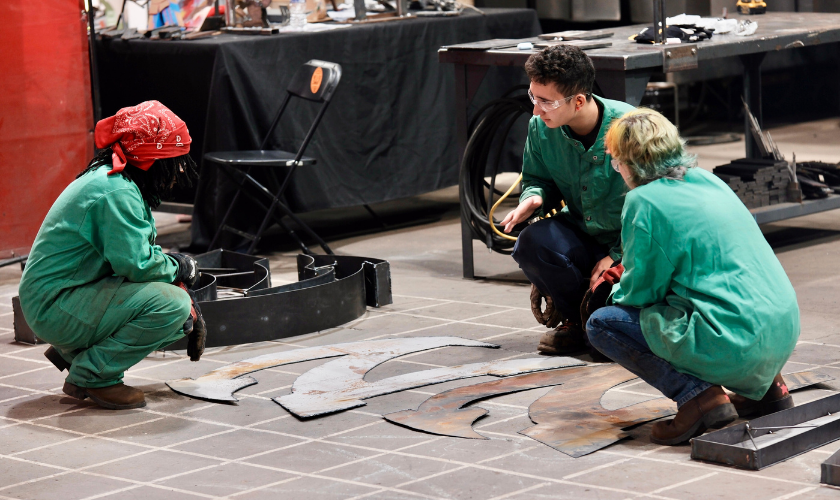
On August 19, I visited Industrial Arts Workshop (IAW) in Hazelwood during their 10th annual Welding Bootcamp. This program teaches youth welding, design, and community collaboration, preparing them for multiple career pathways. What’s remarkable about IAW is the way they’ve scaled their growth with both responsibility and vision. Founded in 2014 by public artist Tim Kaulen, the organization began as a mobile outreach program that delivered welding and design education directly into neighborhoods from the back of a truck and trailer. In 2018, IAW established a permanent site in Hazelwood, creating a base from which to expand their programming. Just last year, they welcomed more than 200 young people through their educational and artistic offerings.
Transition is built into their model: students gain technical and interpersonal skills that carry them into adulthood, while the public art they design and fabricate reshapes the communities where it lives.
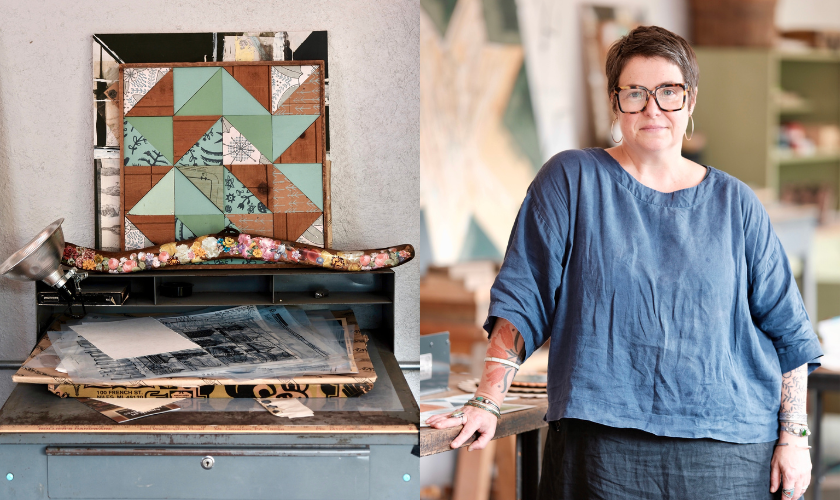
On August 20, I visited the studio of Kim Fox, a contemporary folk artist whose work draws on Appalachian craft traditions. After 17 years living in the South, her return to Pennsylvania marked a personal transition that reshaped her practice. Today, through her studio and her business, Worker Bird, she continues to blend salvaged materials, regional heritage, and contemporary expression.
On August 21, I met with Tao He from the Pittsburgh Chinese Cultural Center as they prepared for their September 13 festival. This year marks the festival’s 10th anniversary, a milestone that reflects the organization’s transition from its founding years into a decade of sustained community celebration.
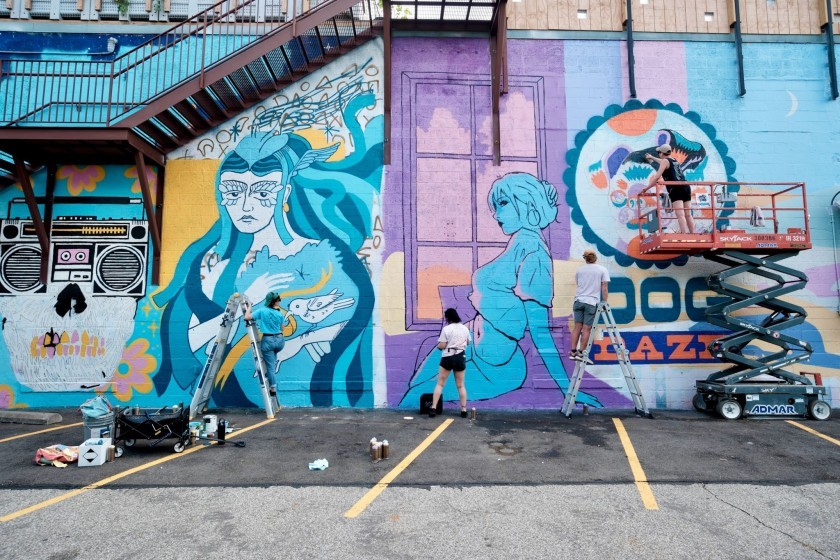
On August 22, in Lawrenceville, I visited Spirit Walls, the annual street art project curated this year by Adam Brouillette in collaboration with the initiatives founder, Brian Gonnella. Since 2017, the initiative has brought artists together to collaborate on a single wall, creating a dynamic canvas for experimentation, dialogue, and shared expression. What makes Spirit Walls especially powerful is its impermanence: each year’s creation is only temporary, painted over by the following year’s team of artists. This cycle of renewal makes the wall an ongoing site of transition, an evolving conversation that embraces change, values collaboration, and reflects the ever-shifting nature of street art itself.
On August 25, I visited Kirsten Ervin in her home studio. After decades of supporting artists with disabilities through teaching and advocacy, Kirsten is now transitioning into embracing her own creative practice more publicly. This shift also requires her to rethink long-held views of what it means to be an “insider” in the art world, particularly after so many years working outside of it. Her current work, ranging from collages to fiber pieces inspired by her childhood drawings, is featured in an exhibition alongside Deborah Lieberman. Kirsten is also the co-founder of the Silver Apple Gallery, a miniature sidewalk gallery that brings rotating exhibitions into public space. Both in her studio and her community, she is actively redefining her relationship with the arts — from advocate and teacher to participant and creator.
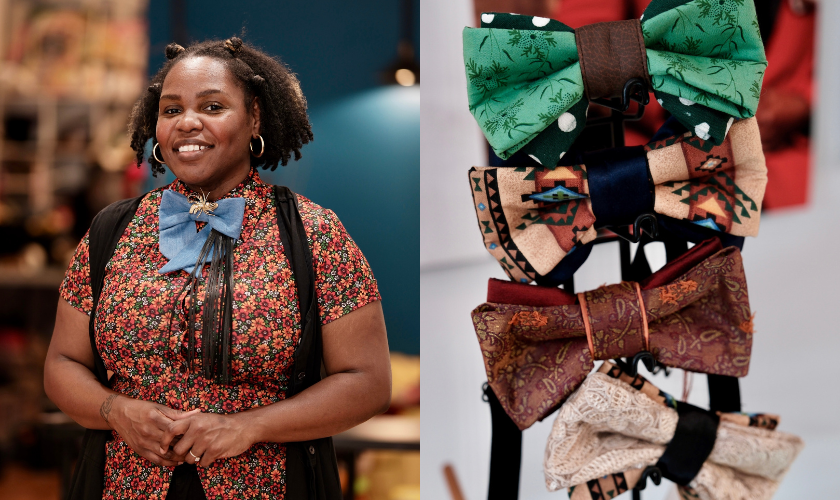
On August 26, I met with creative entrepreneur Nisha Blackwell at her Knotzland storefront in Wilkinsburg. What began more than a decade ago with a single handmade hair bow has grown into a business rooted in sustainability and community. Knotzland has rescued more than 8,500 pounds of textile waste, transforming discarded material into bespoke wearable art. Just as important, Nisha’s practice represents a transition of skills as well as materials. As a self-taught seamstress, she has built a network of women collaborators, training and mentoring others to grow alongside her. Through Knotzland, textiles move from waste to fashion, and women move from skill-building to economic opportunity, a dual transition that ripples through both environment and community.
On August 29, I closed the month with two engagements. First, an interview with Will Halim of Storyburgh, where we discussed my own journey, current trends in the arts, and the work of the Arts Council. Later that day, I visited the studio of James Wodarek at 412 Studios. His upcoming exhibition at Atithi Studios represents a transition in his practice, blending abstract painting with steel cut into geometric patterns. For James, adapting to personal challenges has reshaped his artistic framework, transforming chaos into structure and giving new form to his work.