

Artist Profile |
A Conversation with Painter Raphael Eisenberg
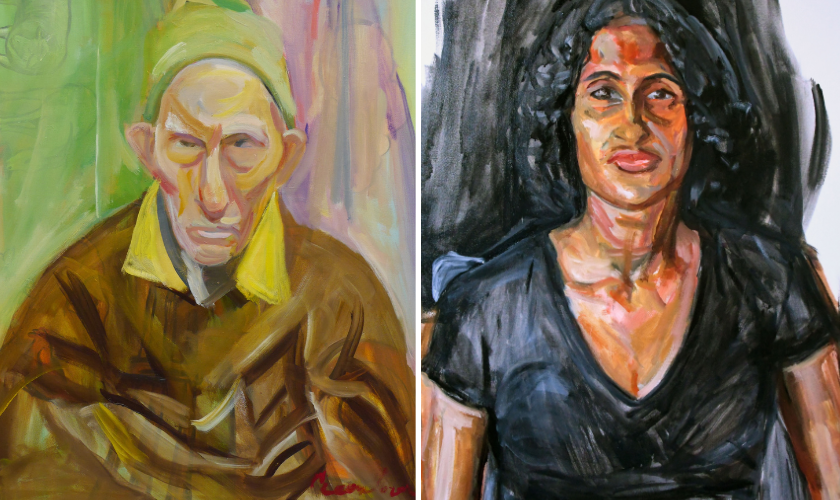
As a sitter for one of Pittsburgh-based artist Raphael Eisenberg's portraits, the offer was a welcomed one. It felt like an opportunity to slip out the back door of a raucous party that had become too noisy, too hot, one where my jaw had become sore from talking, and my eyes burned from exhaustion. It felt like slipping into an unrushed, cool evening where I could breathe deeply. While I sat, Raphael's home phone rang with a call from his daughter, I was offered a glass of orange juice, told many stories about his work and life, and in return offered up stories of my own. We took breaks to look through his drawings and paintings that leaned against the walls of his apartment and I told him about my child's upcoming birthday party plans. We chatted to fill some of the time but also remained in silence — in a sustained, collaborative effort to capture the ticking seconds onto canvas.
Raphael first asked me if I'd consider sitting for a portrait when we met during at one of the Arts Council's monthly Creative Hive community-building events, and I jumped at the chance to learn more about his practice in such an immersive way. The project took place over two Sundays, in three-hour stretches, and finished on a Friday morning so Raphael could make final touches. I walked away from that final session feeling refreshed by the remembering of how humans used to move and how we might be able to move again if we build a world where slow is sacred, talking is optional because presence is full, and sitting is celebrated.
Raphael has lived in Pittsburgh for about a decade. He brought with him from Brooklyn, New York almost a century of study, experience, travel, and a deep drive for capturing the layered stories of everyday people through his paintings. One of his earliest creative memories, he recounted, was drawing a portrait of his father when he was 6 years old. The discovery of this skill, led him to the Art Students League of New York as a child and then as a teenager. After high school he attended Cooper Union for the Advancement of Science and Art in New York and received a BFA in 1967. In 1977 he curated a show at the Brooklyn Museum entitled "Chassidic Artists in Brooklyn" pioneering a new concept in the art world at the time, and over the length of his career has participated in over 20 group and solo shows including a solo exhibit at the Brooklyn College Art Gallery in 2002. Now in his 80s, he continues to paint portraits in a way that feels almost radical in today’s world: asking his sitters to spend three to seven hours with him as he studies their faces, gestures, and essence.
In an era where artificial intelligence is increasingly used to generate artistic images in seconds, Raphael's work stands as a striking reminder of the value of human presence, curiosity, and unmeasured time spent on one's craft. Though his paintings have not yet been widely exhibited in Pittsburgh, his portraits carry the kind of intimacy and narrative power that would resonate deeply with audiences looking to reconnect with an more humane pace of life found in this artistic tradition.
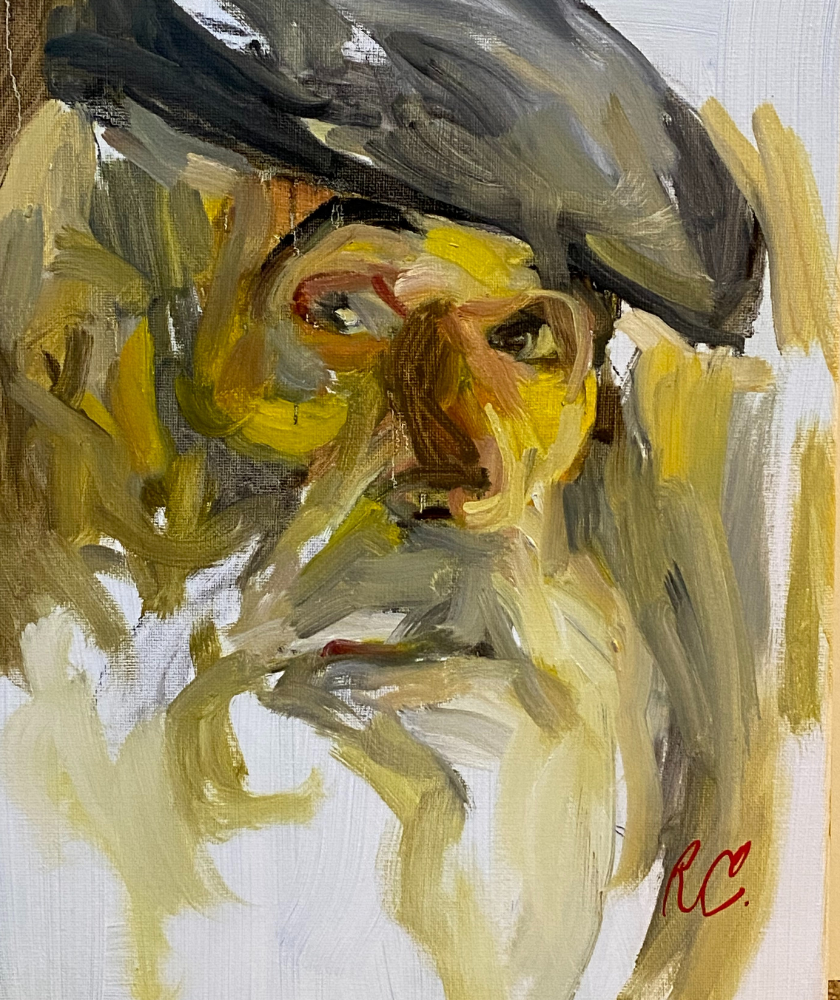
In a time when many artists work from photographs, and AI is being used to create artwork instantaneously, why is it important to you to continue painting directly from life?
Painting is about looking and seeing. My perception is not that of a camera. With our two eyes, our brain can perceive depth. Besides that, the encounter with real people and things is not that of a photograph. I am certainly old school. I don't use a smart phone. I am not looking at a screen either at home or outside. I want to experience directly, not through a medium and that is how I paint and draw. My painting becomes the vehicle for perceiving the subject I am rendering as I express it through my heart and my mind. I want to relate something of the initial experience in paint. I would like the viewer to have a visual encounter.
I was brought up and trained in traditional painting techniques and approaches. I am interested in how my paintings relate human impressions. Not artificial devices. The impressionists were relating their human impressions. It is not just a registration of facts or data. I believe it was Ryder who said: what value is it if you get the cloud just right if you miss the thunder?
Artists are very much individuals and I have found that for me personally, working from observation, from life, is the most successful technique. It is not a categorical proscription, some may work very creatively from photographic references, but I have found that, for me, working from observation is the most successful technique, both in process and in outcome.
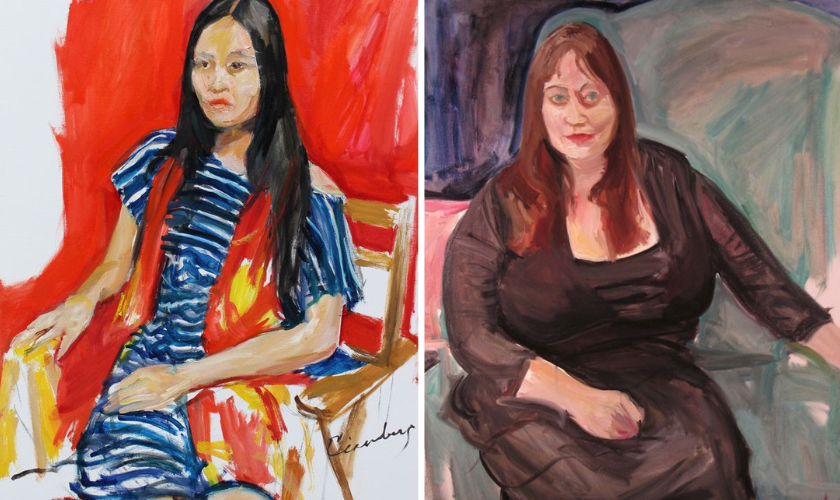
You often join local illustrator groups to sketch alongside others. What draws you to those gatherings, and how do they shape or inspire your own work?
The sketch groups that I have interacted with have been basically to take advantage of a live model to draw from. These short or longer poses are good opportunities to draw from life; to make impromptu short action drawings of the figure. I have been drawing from the live model for 67 years, since I was a child in classes at the Art Students League of New York and continue to find it a fascinating and helpful practice. Having to draw quickly can sometimes produce some very interesting results. Most of the people I have encountered there are working in a relatively prosaic style with little innovation or creative license. I haven't been inspired by these interactions. It is nice that people are drawing.
After moving from Brooklyn to Pittsburgh 10 years ago, how has the city (and its people) influenced the way you approach and create your art?
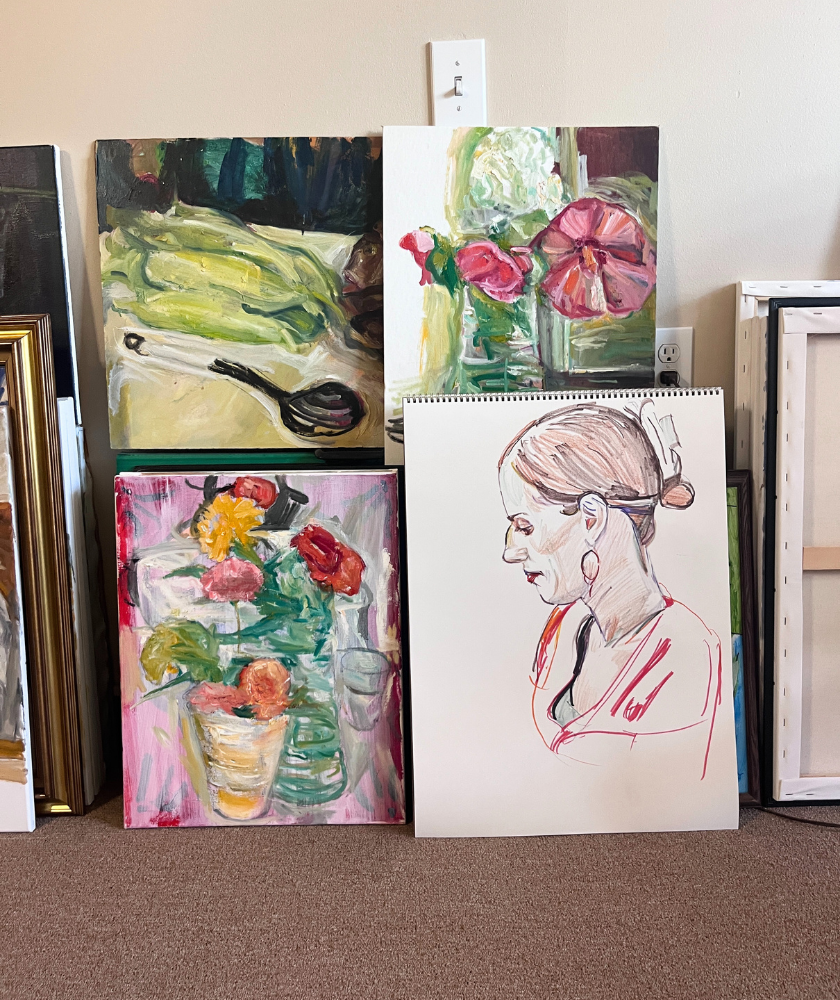
I have been working in relative isolation since moving to Pittsburgh — aside from the people I paint, but I have been working quite consistently. This year I have been painting quite regularly and productively. When portraits are not feasible, I have painted quite a number of still life canvases like flowers or fish or groupings of objects.
I paint fish because they are very evocative. They are fleshy; they are animals. Chardin painted fish and Soutine and Manet and innumerable others. The heads have faces that I find expressive, with open eyes. They seem to have character, or some anthropomorphic state. They are a ready subject of real, fleshy creatures, in stark contrast to still life objects such as bowls and vases or fruit. In New York, I could obtain whole poultry (with feathers or without) at fresh kill markets. I made many paintings of those varied creatures as well. Rembrandt famously bought whole carcasses of butchered steer to paint from.
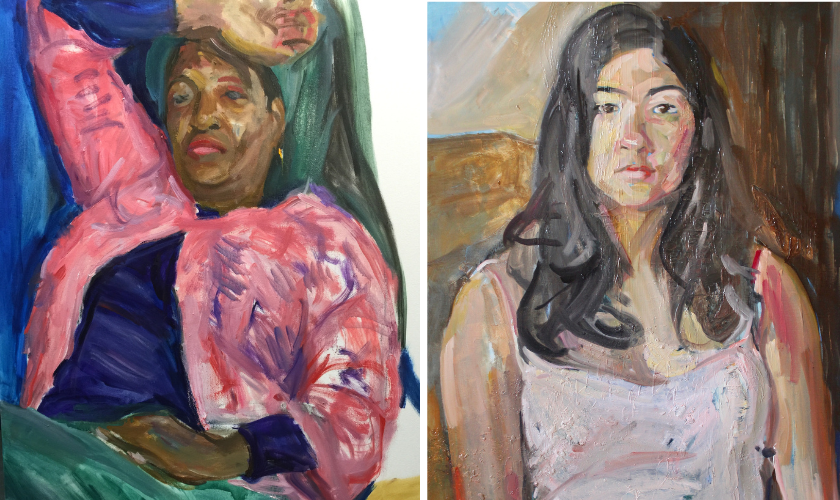
Many of your portraits feature everyday people you see and meet in your neighborhood. What are you looking for in your subjects?
There is an expression that every person is a complete universe. That may go a long way in explaining why I, as well as many of the greatest artists, have found portraiture a compelling form of expression. It is hard to say what I am looking for. Some people just seem very dramatic or have gravitas or seem attractive or are pretty. Or sometimes just subtle and interesting to explore. I have painted all kinds of people: young girls, old women, women with Down syndrome, beggars, a professor, a rabbi, actresses from Fiddler On the Roof. I did portraits of two twin sisters to see if I could differentiate in the drawing. I've painted a jazz musician holding his trumpet and a 300-pound man on his bicycle with a bicyclist helmet on his head.
I hope my paintings will express what I can't articulate in words. Each one is of course an adventure to explore a personality.
To view more of Raphael Eisenberg's work, follow him on Instagram at instagram.com/eisenbergraphael.