

A Conversation with Illustrator, Educator, and Designer Camden Yandel

Can you walk us through your illustration process — from the first spark of an idea to the finished piece?
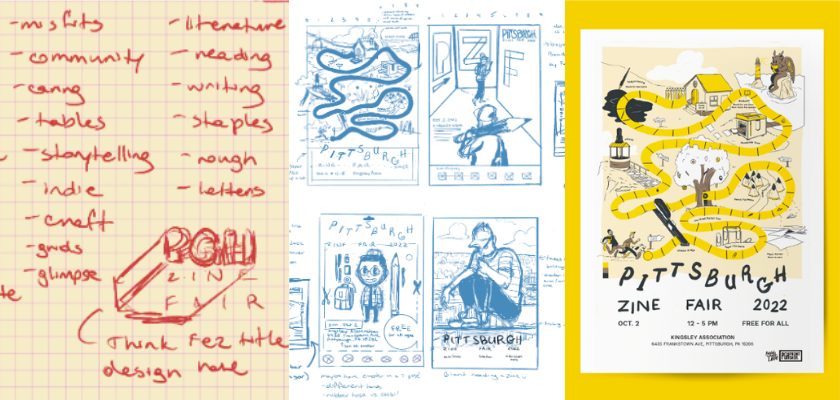
Here’s a show-and-tell (see below) of my process for the poster I did for the Pittsburgh Zine Fair a few years back. It’s more or less my standard process for design, illustration, and even comics.
Step 1: I usually start with a list of things either I or my client associate with the project. Then I’ll also make initial doodles to get any ideas out of my head and onto paper.
Step 2: The next step is research/exploration. I look at how other people have tackled similar projects, and make thumbnails. From there, I’ll pick a few ideas that could work and make cleaner sketches to share, either with a client or a friend.
Step 3: Once all involved are happy with the direction, I move on to a full-scale version that’ll end up being the final piece. Annnnd that’s it!
Are there any virtual or in-person illustration groups or clubs you participate in?
There are a few meet-ups I’ve gone to (the Drawing Board, meet-ups at Bantha), but lately I’ve been hanging out with friends at coffee shops to draw.
In your artist bio, you mention loving baseball and comics — how do these interests show up in your artistic style?
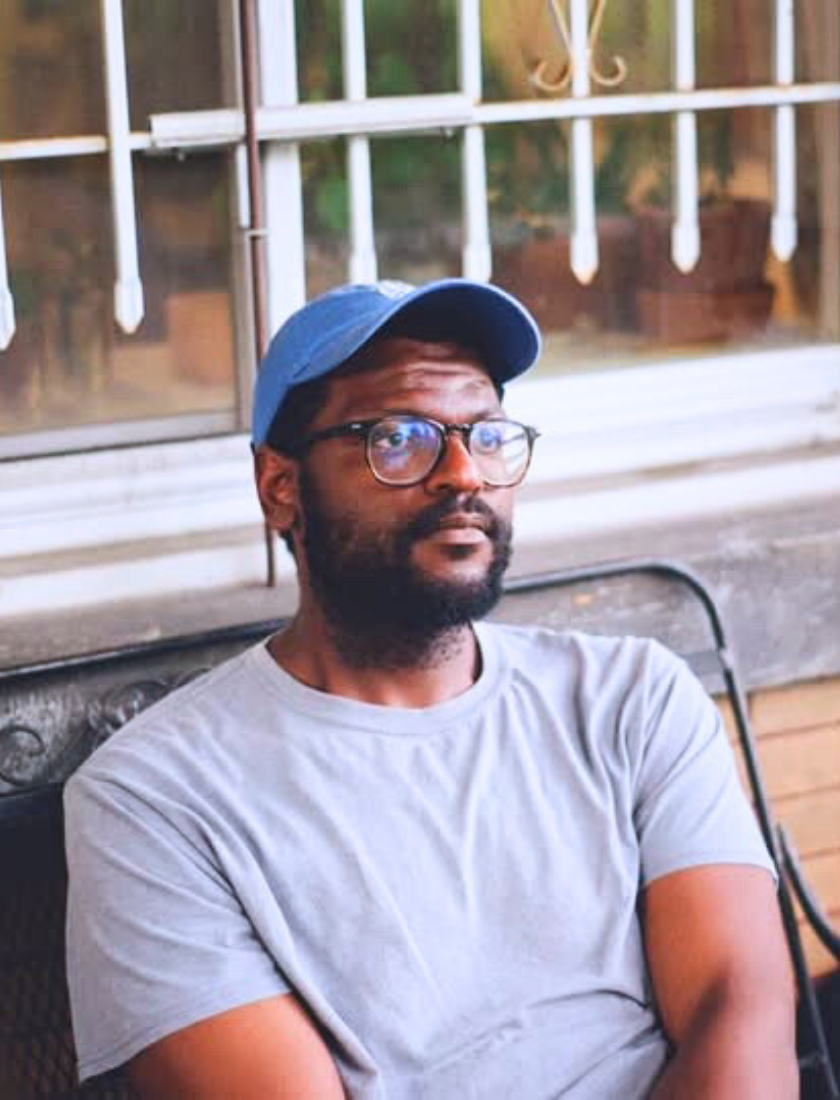
I’d say that my art shows up in baseball more at this point in my life. Playing ball with a bunch of punks (love you, Pounders) has scratched a lot of itches for me. In addition to making such good friends, it’s so fun making game flyers and merch, and a space where having fun is basically mandatory.
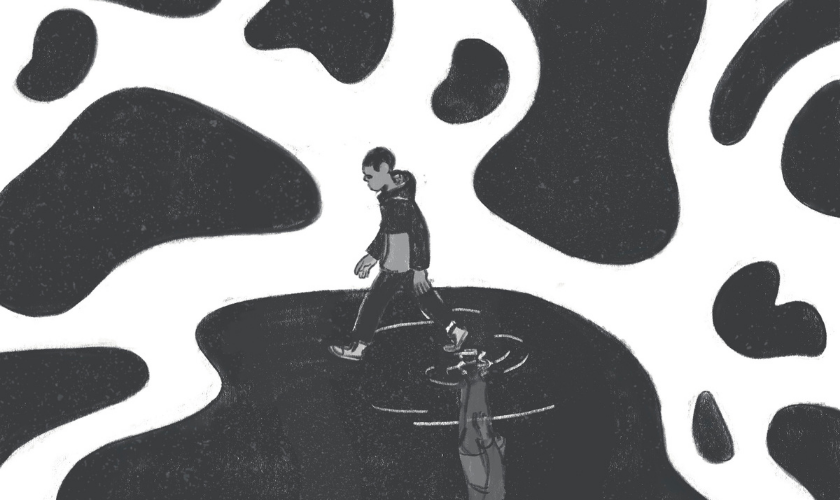
I probably have too much to say about comics, but I think my love of them shows through how I draw. I’m actually working on a comic about baseball that’s kind of on the back burner at the moment.
What is your earliest creative memory?
I don’t know how old I was, but I got in the tiniest bit of trouble for drawing all over my desk at school. From what I remember, my teacher wasn’t upset, but they did tell my mom, and I had to wipe my desk clean as punishment. The same day after school, my mom took me to an art supply store to get my first sketchbook.
Do you have any creatives or artists you look up to? Can you tell us a little bit about them?
Between various teaching gigs and volunteering at Artists Image Resource (AIR), I met a ton of talented artists. But there are two whose mentorship helped shape my practices and outlooks on art and community:
1. Darrell Kinsel is a Pittsburgh-based artist, educator, and co-founder of BOOM Concepts. I can’t exactly remember where we met, but Darrell pushed me out of my comfort zone and is largely to blame, I mean responsible for my work as a teaching artist. Working side-by-side, I always had opportunities to bring my knowledge and experiences to the table, meet other artists who’ve become good friends and collaborators, and have fun making art.
2. Stefan Hoffmann is a Netherlands-based printmaker who was a resident during my time at AIR. I worked as his assistant on a few projects and helped screenprint images on floors, walls, windows — pretty much any surface. Stefan’s always been encouraging. Through his mentorship, I’ve learned to take my practice more seriously, that our surroundings can be sources of inspiration if we slow down, and that there’s no such thing as too much butter.
What’s your dream illustration project that you wish someone reading this would reach out and hire you for?
Nisha, if you see this, let’s make a bowtie together!
You can view more of Camden Yandel's work at camdenyandel.com and follow him on social at instagram.com/camdenyandel.