
Advocacy |
Building Fair Futures for Freelancers
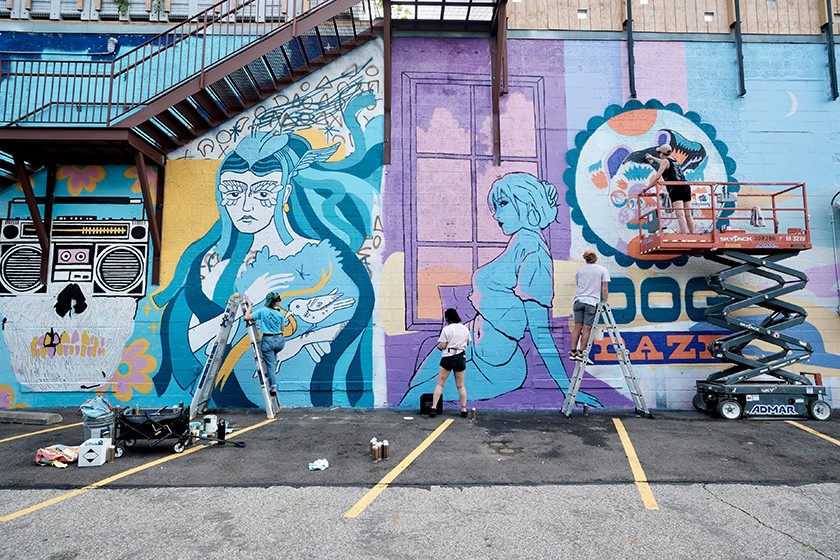
The creative workforce in Greater Pittsburgh and across the U.S. is uniquely characterized by freelance and gig-based work. Unlike W2 employees, independent contractors lack fundamental labor protections such as minimum wage, overtime guarantees, and benefits. While the assumption is that contractors can negotiate fair rates, in practice, many artists and creative professionals must accept the work available, often at low or unpredictable pay. Independent contractors have also been disproportionately affected by systemic issues such as delayed or unpaid wages, uncompensated overtime, limited protections for workplace injuries, and financial instability that can undermine credit, savings, housing, and long-term planning.

The Fair Deal Index uses the checklist to establish a measurable, field-wide benchmark for equitable contracting. Inspired by frameworks like Sustainable Pittsburgh’s recognition program and SustainableCT, the index tracks both organizational adoption and sector-wide progress over time.
By making equity practices visible and measurable, the index incentivizes adoption and allows funders, boards, and community stakeholders to recognize and reward organizations committed to fair contracting. It also creates the opportunity for the Arts Council to promote organizations as leaders in the field in Southwestern Pennsylvania because of their demonstrated commitment to equitable contracting.
By standardizing expectations, providing benchmarks, and celebrating progress, the checklist and index aim to:
Reduce disparities in pay and professional treatment
Increase organizational transparency and accountability
Foster sustainable, fair career pathways for freelancers and gig workers
Support systemic change in arts contracting and funding practices
The Fair Deal Checklist
Bronze Level
- All freelance and contracted positions clearly list rates.
- Contracts include payment terms, specifying whether payment is net-30, net-60, or net-90.
- Contracts are documented and accessible, including scope of work, deliverables, and timelines.
- All published or distributed materials are provided in accessible formats (e.g., screen-reader compatible PDFs, plain-language versions, or alternative formats upon request).
- Calls for freelancers use clear, accessible language, avoid jargon that may unintentionally exclude qualified candidates, and include a statement inviting access needs or accommodation requests.
- Establish an internal policy regarding use of AI for creative work that distinguishes between assistive technologies that support accessibility and automation that replaces or devalues human creative labor.
Silver Level
- Maintain all requisites of Bronze Level.
- Have an internal policy on equitable contracting practices.
- Adopt internal policies that limit delayed payments, such as avoiding net-60 or net-90 when not necessary and exploring options for faster payment cycles (e.g., net-15 or milestone-based payments).
- Include an in-kind budget line that tracks the gap between current contractor pay and equitable standards, enabling the Board to discuss strategies for closing it.
- Recruitment channels intentionally include platforms and networks that reach a broad range of qualified freelance candidates.
- Project-based-work that is filled through open calls are posted for a minimum standard period (e.g., 2 weeks) and to ensure broad accessibility.
- Compensation practices are reviewed to ensure consistency and fairness for roles with similar responsibilities.
- Contracts include clear language regarding professional treatment, including intellectual property, credit, and timely payment.
- Regularly review and update contracts to remove unintentional bias and ensure clarity and inclusivity.
- Reasonable accommodations for candidates and contractors with disabilities or access needs are proactively offered, clearly described, and honored without penalty or stigma.
- Include accountability measures in contracts or internal policies to track and limit overreliance on AI-generated content in place of human creative labor.
Gold Level
- Maintain all requisites of Silver Level.
- No application or request for freelance or contracted work requires unpaid labor (e.g., design proposals, project mock-ups, or extensive work samples beyond standard portfolios).
- Rates for freelancers and independent contractors are set using an industry benchmark or recognized equity resource (e.g., W.A.G.E.’s Fee Request Generator or the Teaching Artist Guild’s Pay Rate Calculator) to ensure fair market compensation.
- Conduct regular pay equity analyses across contracts and adjust disparities as needed.
- Individuals responsible for contracting receive basic training in fair practices and anti-bias principles.
- Establish a standard evaluation process for freelancers that is transparent, fair, and consistent.
- Make public commitments to equitable contracting practices and report progress annually.
- Explicitly prioritize contracting human creatives over automated tools for tasks requiring creative authorship, original content creation, or professional expertise.
Platinum Level
- Maintain all requisites of Gold Level.
- Equity metrics for freelance work are fully integrated into organizational performance evaluation, strategic planning, and budgeting.
- Leadership demonstrates accountability for advancing fair contracting, including public reporting on outcomes.
- Implement mentorship or support programs for freelancers from underrepresented or underserved groups.
- Offer competitive rates that exceed industry minimums and prioritize equitable access for all freelancers.
- Advocate for systemic improvements in arts funding, freelance contracting, and professional standards.
- Regularly evaluate organizational AI practices to ensure they advance equitable contracting, support professional development, and preserve opportunities for original creative work.
UPDATE: Since initial publication in October 2025, the Arts Council has officially formalized a partnership with the Equity | Impact Center to advance the Fair Deal Checklist and Index. To ensure this advocacy initiative reflects the lived experiences and needs of our stakeholders, we hosted three focus groups in December 2025. Two sessions engaged independent artists and arts workers; the third brought together organizations with a history of contracting gig workers and non-W2 labor.
The Fair Deal Checklist above was edited in January 2026 to reflect the feedback we received through those focus group so that we can begin meeting with organizations to discuss adoption and implementation. In parallel, we will begin building a resource library to support organizations as they work toward equitable contracting practices.
As part of our commitment to Build Fair Futures for Freelancers, we initially sought initial feedback from at least 30 freelance arts workers and 5 organizations. If you are a freelancer arts worker and would like to share your feedback, please send us your thoughts using the form below.