
Guest Blog |
Endurance Is Not Infrastructure: How Policy Shapes (and Stalls) Public Art
This first-person essay is part of a series on arts and public policy, published ahead of the Greater Pittsburgh Arts Council’s Policy and Action Roundtable on March 5.
Over the years, I have worked with the City of Pittsburgh as a consultant and in various advisory roles. Through this work, I have witnessed firsthand how policy structures and processes can quickly shift an opportunity into an obstacle.
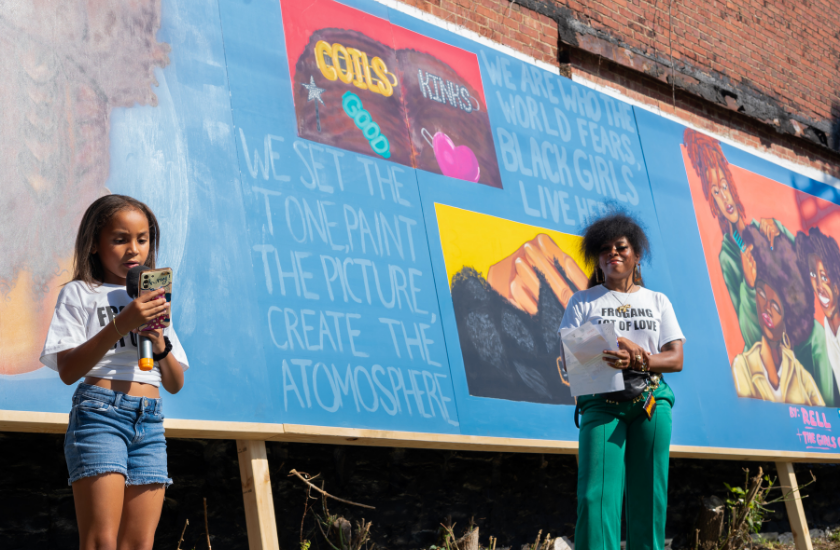
One of the clearest examples was in 2022, when I supported artist Rell Rushin's public art project 'Frofully Connected.’
The mural, created by Rushin in collaboration with the FroGang Foundation through Shiftworks Community + Public Arts’ Public Art and Communities Program (PAC), was designed to affirm Black girls’ self worth, celebrate natural Black hair, and address racism experienced by Black women and girls in Pittsburgh. The work required months of research, relationship building with FroGang founder Kelli Shakur and students of the program, site visits, public meetings, and coordination with city officials and community stakeholders.
FroGang selected a site for the mural in their home neighborhood of Beltzhoover, a vacant lot they would later have to adopt from the city to do this work. The adoption process required identifying an eligible parcel, passing an intake review, submitting a comprehensive application with soil testing results and plans, and signing a temporary lease agreement. Before the mural could even be considered for installation, the site required additional environmental reviews and multiple approvals and permits from the city, the state, and the NEA.
Looking back, what stalled this project’s momentum was not the artist's vision or the community's commitment, but rather the structure of policy itself.
I recognize that permitting, environmental reviews, and safety requirements are necessary and serve a legitimate purpose. The issue is not that these steps exist, but that the cumulative weight of approvals, applications, and technical requirements is impossible for a single artist to manage alone.
Artists are expected to navigate these opaque, fragmented systems alone while also producing work. Even when compensated for their creative labor, the administrative demands require significant time, technical knowledge, constant coordination, and immense administrative labor that far exceeded the scope of the artist’s role. In this instance, Rushin had something most artists don't: a small administrative support team through the PAC program to help navigate policy. Without it, the project would likely have failed.
Expecting individual artists to absorb this level of procedural responsibility is extractive because the system falsely assumes they can expand their capacity indefinitely without structural support. I wonder how many qualified and experienced artists would love to engage with the city, yet feel excluded by policies and systems that require them to carry complex administrative and regulatory burdens on their own?
About the Author
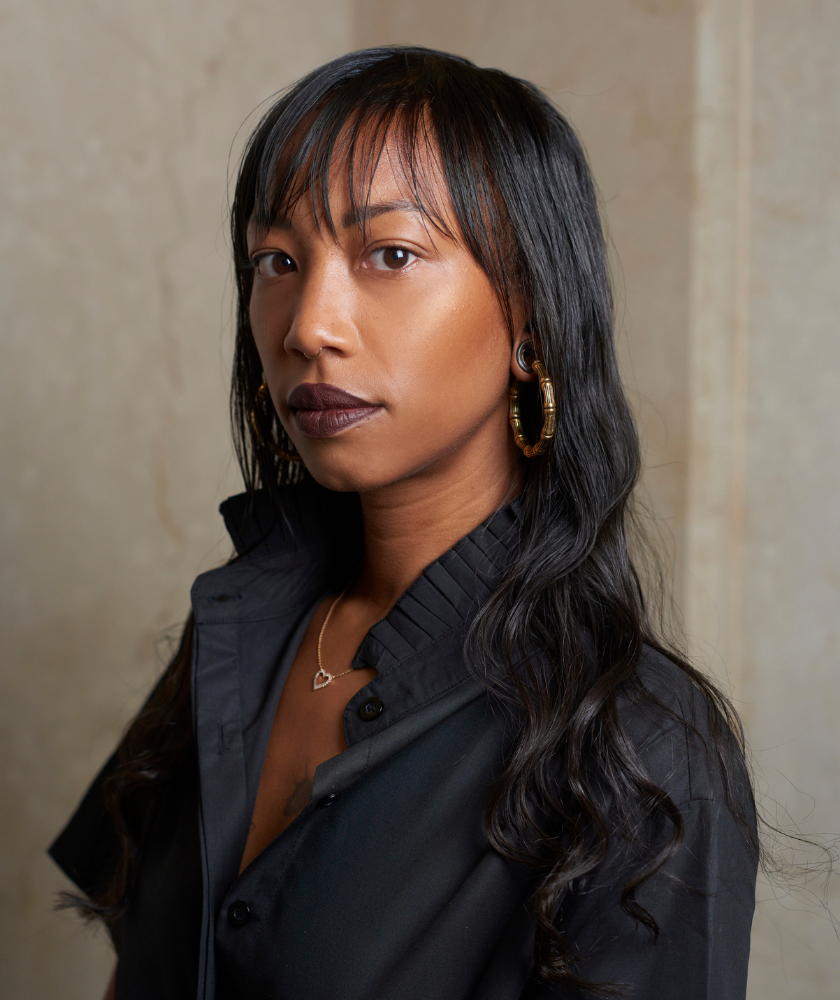
Jessica Gaynelle Moss is an artist who supports other artists through her curatorial work, consultancy and custodianship.
Over the past decade, Jessica has built a body of work centered on shaping space, cultural preservation and intergenerational care. From her nationally-recognized neighborhood-embedded artist residency program The Roll Up (2016) to her work providing professional development and childcare for Black artists who m/other with Sibyls Shrine (2019) to her vital multi-city Emergency Preparation Workshops that share survival strategies based on Octavia Butler's Parable of the Sower (2024) to her Soil + Shelter: Mapping Black Land, Stewardship, and Living Memory Tour (2025), a month-long journey documenting 15 Black-owned lodging spaces.
As an artist, her work refuses limitation and centers possibility. Jessica's practice is grounded in interaction, care and the belief that power is most effective when shared, used to mirror, magnify and sustain the brilliance of others.
Policy and Action Roundtable
If you’re interested in learning more on how public art and policy shape our communities, join us for the Greater Pittsburgh Arts Council’s Policy and Action Roundtable on Thursday March 5 at Point Park University.
This convening will bring together artists, cultural workers, nonprofit leaders, and Pittsburgh Mayor Corey O’Connor and Allegheny County Executive Sara Innamorato for a discussion on shared priorities, policy barriers, and opportunities for collaboration that shape the future of Pittsburgh’s cultural ecosystem.
Policy and Action Roundtable. Thursday, March 5, 9-11:30 a.m. Point Park University Ballroom, 201 Wood St., Downtown. $15. Learn more at pittsburghartscouncil.org/events/policy-and-action-roundtable.