
Guest Blog |
City Policy is Failing Grassroots Creative Spaces
This first-person essay is part of a series on arts and public policy, published ahead of the Greater Pittsburgh Arts Council’s Policy and Action Roundtable on March 5.
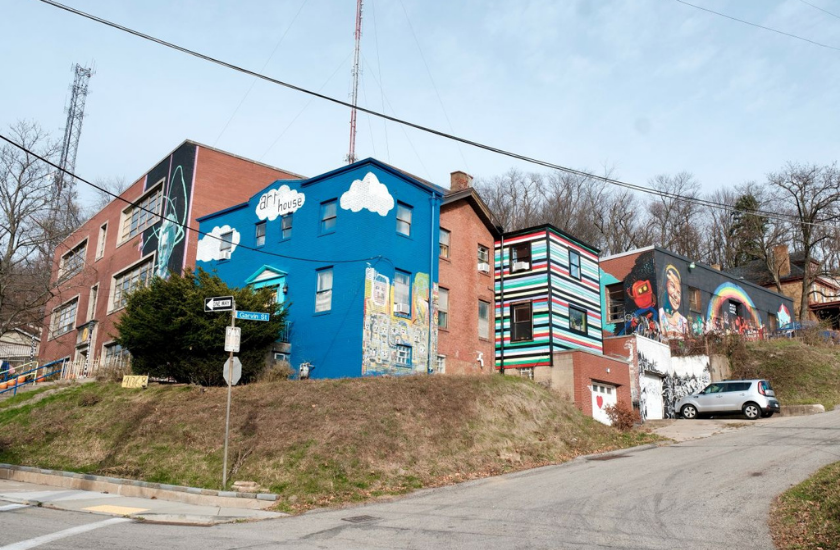
In 2019, my partner Ben Tolman and I bought a large former Catholic school in Observatory Hill — a building that had been unused for more than a decade — with the goal of turning it into a healthy, inspiring creative space. We were moved by the dream of creating an opportunity for artists to grow without financial instability, in a creative space centered in community. We named the project Fiasco Art Center, and, even though it was intimidating and entirely self-financed, we hoped it would inspire other artists and the community to believe that they could build significant cultural spaces of their own.
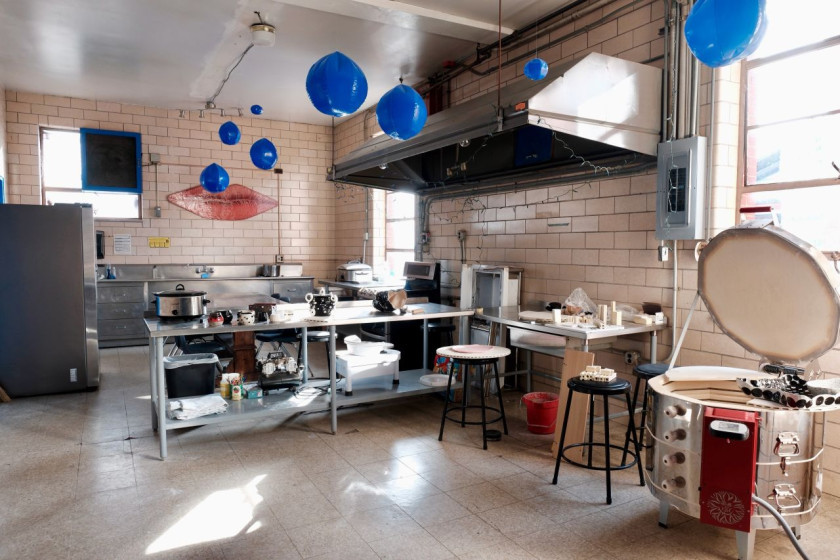
The idea was simple, but ambitious. The former rectory would become the Art House, a space for national and international artists in residence to come stay for a few months and develop essential relationships with other local artistic communities. The former Nativity School became the Creativity School, with studios, exhibition and gallery space, metal and wood shops, picture framing, a performance stage, and large areas for community engagement and exchange.
At its core, the Fiasco Art Center was about combining a need for affordable creative spaces with care and presence inside an existing structure that needed some love.
What might have looked like an overlooked block was, to neighbors, a deeply cared-for building. Many had attended the former school themselves. Through potlucks and introductory letters to the local community, we learned about their memories in those hallways and classrooms, gained a deeper understanding of the site’s history, and understood better our role as artists revitalizing the physical structure of the soul of that community.
Fiasco was a completely self-funded project. We cleaned, stabilized, and started to develop the buildings ourselves. We listened to neighbors’ ideas, helping us shape what the center would become, and connected with local artists to understand some of the needs that we were in position to provide. For us, this project was never about a business model with high profitability or real estate speculation; instead, our mission was a commitment to stewardship. These buildings were seen by us as living organisms, in need of care and intention to thrive, nurturing a sanctuary for creativity and mutual support.
What we didn’t anticipate was how difficult it would be to navigate city systems designed with no middle ground for projects like ours.
From the start, we encountered a fundamental disconnect between our mission and city policy. We were told that unless this historic building functioned exactly as it had decades ago — a full-scale middle school — we could not move forward. There was no existing framework for adaptive reuse that accounted for lower occupancy, phased renovations, or the unique realities of a self-funded creative project. In reality, we were held to the same standards as large-scale commercial developers, despite having a fraction of their budget and a much lower risk profile.
The result was years of architectural and legal limbo. Every step forward was met with shifting interpretations and mounting costs, often without a clear or viable path to compliance. The cost, however, was not just financial; it was the opportunity cost. Instead of spending our energy building programs, deepening community ties, or supporting Pittsburgh’s artists, we were directing all our time and focus to a bureaucracy that drained the very resources we intended to invest in the North Side.
About the Author
Noelle Rozo is a ceramist, interpreter/translator, educator and activist. Born and raised in Brazil, Noelle’s life has always revolved around community and mutual aid. Whether she’s guiding kindergarteners, advocating for immigrant rights, or shaping a new sculpture, her goal remains the same: finding ways to improve the human experience outside the constraints of capitalism. Noelle spends her time advocating for others and sculpting new ways to exist, resist, love and care in a busy world.
Policy and Action Roundtable
If you’re interested in learning more on how public art and policy shape our communities, join us for the Greater Pittsburgh Arts Council’s Policy and Action Roundtable on Thursday March 5 at Point Park University.
This convening will bring together artists, cultural workers, nonprofit leaders, and Pittsburgh Mayor Corey O’Connor and Allegheny County Executive Sara Innamorato for a discussion on shared priorities, policy barriers, and opportunities for collaboration that shape the future of Pittsburgh’s cultural ecosystem.
Policy and Action Roundtable. Thursday, March 5, 9-11:30 a.m. Point Park University Ballroom, 201 Wood St., Downtown. $15. Learn more at pittsburghartscouncil.org/events/policy-and-action-roundtable.