
Grantmaking |
Pennsylvania Council on the Arts Asked What the Field Needed. Then It Did Something Else.
Pennsylvania Council on the Arts recently announced a rebrand and a new strategic direction centered heavily on economic development, a shift that moves the agency away from its original mission: supporting the arts as a public good.
This blog takes a closer look at what the agency's engagement process actually found, what the agency chose to do, and the path it appears determined to pursue despite the feedback it has received.
Established in law as the Pennsylvania Council on the Arts, the agency rebranded as Pennsylvania Creative Industries, with the tagline “Powered by Pennsylvania Council on the Arts.” Throughout this blog post, I’ll use Pennsylvania Council on the Arts/Pennsylvania Creative Industries, or PCA/PCI, to refer to the agency because, truthfully, it is unclear how the entity now wishes to be identified.
Editor’s Note: the Greater Pittsburgh Arts Council has served as one of PCA/PCI's regional partners for decades, and the community we serve is directly affected by the decisions described in this post.
What the PCA Was Created to Be
The Pennsylvania Council on the Arts was created through Act 538 of 1965, at a moment when the Commonwealth made a clear, values-driven statement about who it wanted to be. The bill was sponsored by Republican Rep. Robert J. Butera, passed with unanimous bipartisan support, and was signed into law by Gov. William D. Scranton, also a Republican. That level of consensus is rare in any era, but it tells us something important: the arts were once understood as essential to civic life, cultural identity, and the public good, across party lines.
Act 538 charged the Council with "the encouragement and development of the various arts." Full stop. Not the creative industries. Not creative entrepreneurship. Not economic activity wrapped in cultural language. The arts themselves.
From its inception, the PCA was not framed as an economic development tool. Section 5 of the Act, the section that defines the agency’s specific duties, charged the PCA with:
- Making a comprehensive survey of public and private institutions engaged in artistic and cultural activities, including music, theater, dance, painting, sculpture, architecture, and allied arts and crafts
- Determining "the legitimate needs and aspirations culturally and artistically of our citizens in all parts of the State."
- Ascertaining how existing and potential resources could "serve the cultural needs and aspirations of the citizens of the State."
- Assisting communities "in originating and creating their own cultural and artistic programs."
The legislation also included a provision that stands apart for its clarity: the PCA was directed, in carrying out its work, to "avoid any actions which would interfere with the freedom of artistic expression or with the established or contemplated cultural programs in any local community."
This agency was created in the understanding that art, all art, not just art that generates measurable economic return, is part of what makes a Commonwealth. Sixty years later, that mandate has not changed. What has changed is whether the agency is honoring it.
A Process, a Promise, and What Rose to the Surface
Public engagement processes are built on a promise: we are listening, and what we hear will shape what we do. When that promise is broken — when engagement is used to retroactively legitimize decisions already made — it is not simply an administrative failure. It is a betrayal of trust.
The survey also asked respondents to identify the barriers that most hinder their work. None of the listed barriers can be addressed by rebranding a state arts agency as a "creative industries" initiative. They are barriers that call for sustained, place-based, capacity-building investment, the kind that only works when it is delivered through trusted relationships and regional infrastructure.
Using the regional community conversation sessions to validate a new strategic direction raises real concerns. Turnout in most sessions drew relatively little participation. Ridgway drew 11 participants, Troy drew 9, Altoona drew 8. Even the largest sessions, in Hazleton and Philadelphia, drew 35 and 30 respectively. Across nine regional conversations, total attendance was approximately 150 people. The voices of those who showed up matter, but as a sample of Pennsylvania's arts ecosystem, it is a thin one.
More troubling is what many in the field reported that they never received an invitation to attend. Rostered teaching artists, current and past PCA/PCI grantees, and regional partner organizations that have historically helped administer state-funded programs across the Commonwealth described being unaware the sessions were happening until they had already passed. If the people most directly served by PCA/PCI's existing programs were not meaningfully included in the process that would determine their future, the claim that this engagement represents the field's priorities deserves scrutiny.
Despite All of That: What the PCA/PCI Chose to Do
In late 2025, the PCA/PCI announced a rebranded identity, “Pennsylvania Creative Industries, powered by Pennsylvania Council on the Arts,” and a new strategic framework organized around five areas: asset development, workforce development, community development, visibility, and policy. New grant programs were launched focused on innovation, economic development, and workforce. The agency framed this entire shift as a direct response to what its listening process found.
It is possible to see, at least on paper, how the new grant programs connect to three of those five strategic areas. Programs like the Innovation and Impact Grant and the Creative Entrepreneur Accelerator speak to asset development and workforce development. The Creative Communities Initiative gestures toward community development. But visibility and policy, two of the five pillars the PCA/PCI identifies as central to its strategic framework, are notably absent from any coherent programmatic investment.
What is the agency doing to elevate the visibility of Pennsylvania's creative sector in ways that reach communities not already connected to its grantmaking? What policy infrastructure is being built or strengthened? The broader claim, that this new direction reflects what the field's listening process found, is very difficult to sustain.
The regional partnership program has been discontinued.
The partnership model was a deliberate policy response to a documented inequity. In the mid-1990s, it was determined upon analysis that public arts dollars were not equitably reaching smaller communities across Pennsylvania. The bulk of state investment was flowing to Philadelphia and Pittsburgh, leaving the rest of the Commonwealth significantly underresourced. The partnership model was created specifically to correct that imbalance. By establishing a network of regional organizations with deep roots in their communities, the PCA/PCI ensured that public funding could reach all 67 counties, and that the relationships were in place to make that reach meaningful.
For decades, that network delivered. Regional partners were not administrative middlemen, they were the connective tissue between a state agency and the communities it was created to serve through:
- Running the programs, building the relationships, holding the institutional knowledge, and showing up in places that a centralized Harrisburg operation cannot reach on its own.
- Facilitating community conversations in both urban and rural communities
- Providing substantial technical assistance to artists and organizations in their service areas, helping applicants understand programs, navigate processes, and access public funding that would otherwise have remained out of reach.
In ending the partnership program, the PCA/PCI has re-centralized its programs within a single state office, moving to what it calls a "direct service model." The efficiency argument is real but incomplete. Direct administration also means no regional intermediaries to translate community needs into program response. And critically, the PCA/PCI is dissolving the partner model without adding additional staff capacity to absorb the work those partners were doing.
PCA/PCI Partners in Region 14
Serving Allegheny, Beaver, Green, and Washington counties
View a detailed map of all PCA/PCI statewide partners: Combined Partnership Map
What happens when a budding arts organization in Bradford County has a question about eligibility? What happens when a small-but-scrappy arts organization in Clearfield needs help putting together a grant application? These are not hypothetical concerns, they are the daily work that regional partners have provided for 30 years, work that is now expected to be absorbed by a state agency office that has not grown to meet it. The field has every reason to be concerned about what level of technical support and responsiveness will actually be available when programs are administered directly.
Arts in Education has been discontinued.
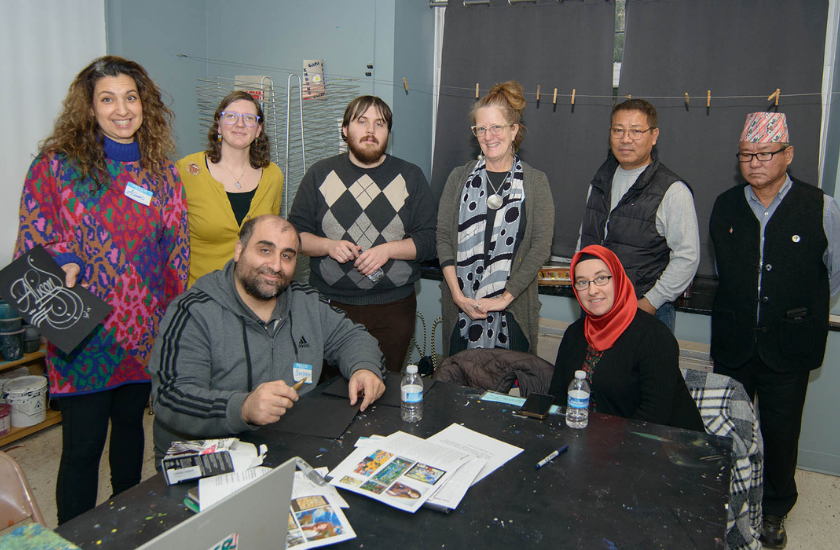
The Arts in Education program centered around teaching artist residencies, which placed working artists in classrooms and schools across the Commonwealth.
Arts in Education was about the social, educational, and emotional benefits of the arts for young people, and about ensuring those benefits were embedded in the learning experiences of students across Pennsylvania, not just those lucky enough to attend well-resourced schools. It brought artists into classrooms as co-teachers, working alongside classroom educators to reach students in new and meaningful ways and to teach core curriculum subjects through creative practice. A percussionist helping students understand fractions. A dancer making earth sciences tangible through movement. A quilter using her craft to teach history. These were not enrichment activities bolted onto the margins of the school day, they were pedagogical partnerships that met students where they were and opened doors that conventional instruction sometimes couldn't.
Folk and Traditional Arts has been discontinued.
At its core, Folk and Traditional Arts relied on a network of folklorists working throughout Pennsylvania, researchers, documentarians, and cultural practitioners, who spent their careers understanding, recording, archiving, and promoting the folk traditions alive in communities across the state. Their work was active, relationship-driven scholarship that went into communities, built trust, and created a living record of Pennsylvania's cultural heritage: the music, the craft traditions, the foodways, the storytelling forms, the ritual practices that communities carry across generations.
That work was historical, ensuring that traditions with deep roots in Pennsylvania's past were documented and preserved before they disappeared. It also was contemporary. As Pennsylvania's demographics have shifted and the state has become a welcoming home to immigrants from across the world, folklorists created context for the new traditions those communities brought with them, recognizing that folk and traditional arts are not frozen in the past, but living practices that evolve as communities evolve.
The Preserving Diverse Cultures division has been dissolved.
This is perhaps the most striking decision of all, and the one that most directly contradicts what the field expressed.
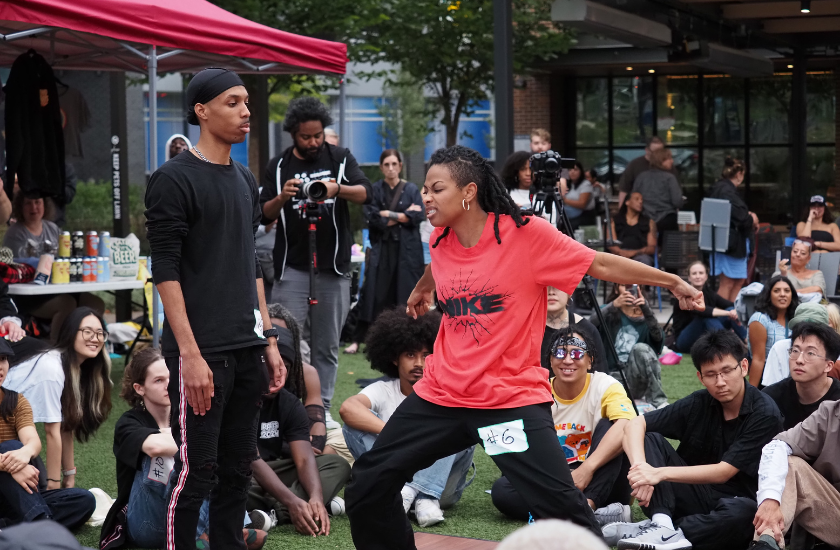
Preserving Diverse Cultures was built specifically to serve organizations that uplifted historically under-represented cultural identities, which too often existed at the margins of mainstream arts funding, not because their work is less valuable, but because conventional grant programs are not always designed with their capacities in mind. The division provided direct capacity building support through multi-year grants, a funding structure that gives organizations the runway to do something that passion alone cannot: build the administrative infrastructure, the financial reserves, the organizational systems, and the staff capacity that allow an organization to sustain itself over time rather than lurching from cycle to cycle in survival mode.
Click to view a detailed timeline of the Pennsylvania Council on the Arts from 1966–2026
In 2023, the Creative Sector Flex Fund offered some renewed access for small and mid-sized organizations with revenues between $10,000 and $200,000, a meaningful if temporary step. But in 2025, the new Creative Assets grant reset eligibility to organizations with annual budgets between $100,000 and $2,000,000, leaving the smallest organizations once again without a clear pathway to state support.
Each of these changes, taken individually, could be explained as a programmatic adjustment. Taken together, they describe something more intentional: a state arts agency steadily reorienting itself away from supporting art for its own sake, for what it does in communities, classrooms, living rooms, and gathering places, and toward supporting art primarily as an economic input. The message, whether intended or not, is that the state is interested in art that yields measurable economic results. Art that stimulates learning outcomes, civic engagement, individual and collective expression, or social cohesion, the reasons most people make and participate in the arts, appears increasingly outside the frame.
There is also a harder question worth raising: how much of what the PCA/PCI is now pursuing as its strategic priority genuinely belongs to a state arts agency, and how much of it overlaps with the existing purpose and programs of the Pennsylvania Department of Community and Economic Development?
DCED already administers economic development programs, workforce initiatives, and community investment tools, including the Neighborhood Assistance Program tax credit that the PCA/PCI's own Creative Communities Program was designed to complement. If the PCA/PCI is repositioning itself as a creative economy development agency, the Commonwealth should be honest about whether it is building something genuinely new, or whether it is duplicating infrastructure that already exists, at the cost of the arts infrastructure that doesn't exist anywhere else.
What a Responsive Strategic Plan Would Have Looked Like
A strategic plan genuinely built on what the field expressed would have looked meaningfully different from what the PCA/PCI has announced.
It would have reframed the agency's role from funder to capacity builder.
The financial barriers respondents named are real, but the non-funding needs list was long, rich, and specific. An agency serious about serving its field would have invested in technical assistance, cohort learning, and organizational development, not just grant dollars. It would have asked: what does our sector need to be stronger, not just what can we fund?
It would have made cross-cultural collaboration a programmatic priority, not just a value statement.
With 312 respondents identifying this as their top need, it warranted more than language in grant criteria. It called for a dedicated program strand, structured convenings, co-creation opportunities, and investment in the relationships between communities that produce genuine cultural exchange.
It would have built a rural equity strategy.
With 242 respondents naming rural opportunities as a top need, and with community conversations confirming the presence and commitment of rural arts communities across the state, a responsive agency would have developed differentiated support models for rural and small-town arts ecosystems rather than applying urban program frameworks statewide.
It would have invested in community cultural planning.
At 266 responses, this need was nearly as strong as the top response. Communities across Pennsylvania are trying to articulate and act on a cultural vision, and they are asking their state arts agency to help them do it. That is a convening role, a planning role, a technical assistance role. It does not fit neatly into a grant program, which is exactly why it requires a different kind of institutional commitment.
The Question of Accountability
When a public agency conducts an engagement process, it is not just gathering input. It is entering into a relationship with the communities it serves. It is saying: your knowledge matters to us. Your experience of the sector is data. Your priorities will shape our work.
The new programs the PCA/PCI is launching are oriented toward outcomes that look good in economic development reporting: jobs, GDP contribution, industry growth — not oriented toward the community cultural planning, cross-cultural collaboration, rural equity, and capacity building that the field said it needed most. What does it mean when an agency uses the legitimacy of public engagement to justify a direction that contradicts what the public said?
It means the engagement was not really about listening. It was about creating the appearance of a process that led, inevitably, to a conclusion already reached. It means the field's participation, the insights of survey responses, the time spent in community conversations, the good faith investment in a process, was used as cover, not as input. And it means that the communities who showed up, who shared what they needed and what they struggled with, were told something that was not quite true: that their voice would shape what came next.
We are not opposed to the PCA/PCI evolving. The agency should grow and adapt over time. What we are opposed to is an agency evolving to serve its own institutional interests while disregarding the voiced priorities of the field it exists to support. When an agency conducts a public engagement process and then moves in a direction that contradicts what it heard, the field has not just the right but the responsibility to say so clearly, and to demand accountability.
What Is to Be Done
A state arts agency that evolves in response to what its communities need would look more like a capacity builder and less like a grant dispenser. It would invest in the relational infrastructure, regional partners, cultural planners, teaching artists, folk arts specialists, that connects public dollars to community life. It would acknowledge that rural Pennsylvania and urban Pennsylvania have different needs. It would treat the preservation of diverse cultural traditions as a core public good, not an optional program to be cut when priorities shift.
And it would be adequately funded to do any of that.
Pennsylvania's state arts budget has remained essentially flat for over a decade. When measured in per capita investment, Pennsylvania ranks 33rd in the country, despite ranking in the top ten nationally for arts vibrancy. That gap limits what any state arts agency, regardless of its priorities, can actually accomplish.