
OP-ED |
The Distance Between Pittsburgh and Cleveland: We're Closer than We Think
I owe Ohio an apology.
Growing up in Western Pennsylvania, Ohio was often a punchline. After spending 29 of my 41 years in Pennsylvania, I never made it a priority to visit. It always felt close enough that I could go someday, and similar enough that I didn't think I'd be missing much.
I was wrong.
After the 2025 Americans for the Arts conference in Cincinnati, I became curious. Since then, I've spent time in Cincinnati, Columbus, and now Cleveland. Each city has surprised me in different ways, with its arts community, civic leadership, and willingness to think boldly about the role of culture in shaping the future.
Last week, I was invited to Cleveland to be a panelist in a conversation about cultural planning. The conversation was organized by The City Club of Cleveland in collaboration with Assembly for the Arts, Cleveland's equivalent of the Greater Pittsburgh Arts Council. I served alongside Valerie V. Gay (City of Philadelphia), Mary McNamara Bernsten (Rockford Area Arts Council), and Nicole Mullet (ArtsNow), and the conversation was moderated by Jennifer Coleman (The George Gund Foundation).
Cleveland is in the middle of figuring out how it wants to define, frame, and invest in its cultural assets going forward, which is not an abstract question for me. Pittsburgh and Allegheny County are asking ourselves a version of it right now too, as both governments work through their own comprehensive plans.
Outside the panel, I had time to get to know Cleveland a little better, and to think seriously about how Cleveland and Pittsburgh might collaborate more, given that we're only two hours apart. What struck me most over those few days was how consistently culture showed up as a marker of priority, both through what municipal government staffs and funds, but also through the choices nonprofits make about who they serve and how, and through what private citizens decide to invest their own time, money, and relationships in.
A city's priorities are rarely announced outright. They're revealed in where the money goes, who gets a seat at the table, and what gets designed in from the start versus bolted on later, whether that decision is playing out inside a mayor's cabinet, a nonprofit boardroom, or someone's own studio. Here’s what stood out to me across all three, the people behind that work, and what Pittsburgh might adopt from Cleveland.
Accessibility as a design principle, not an afterthought
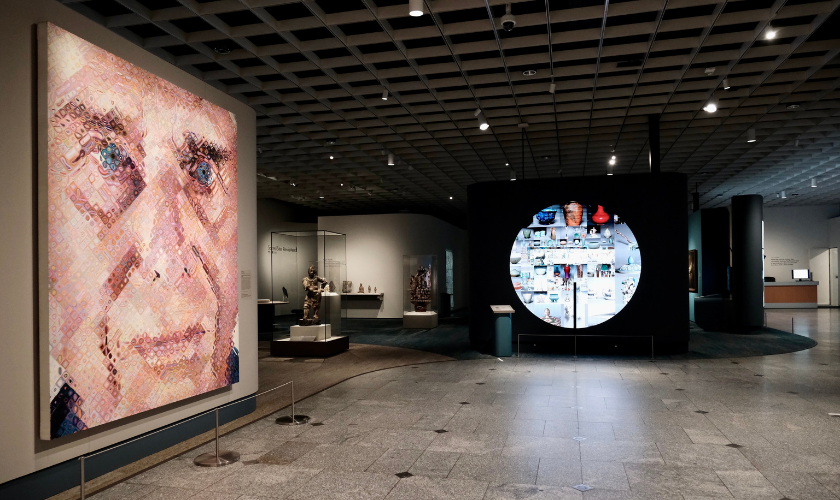
At the Cleveland Museum of Art, curator Emily Liebert and Chief Learning Officer Jacquelyn Sawyer walked me through the newly opened ArtLens experience, now in its second iteration. ArtLens starts from a specific problem: art museums can feel intimidating, and that feeling keeps people out. Rather than treat accessibility as a set of accommodations layered onto an existing experience, the CMA team designed it into the foundation, giving visitors real tools to look more closely and engage more deeply with the work in front of them. Binocular Tension, an interactive artwork by Rafael Lozano-Hemmer, shows what that looks like in practice: infrared heat lamps track the piece's movements, letting visitors with low vision sense that tracking through heat rather than sight alone.
That distinction says something about what CMA has decided matters. Accessibility considered after the fact tends to read as an add-on. Accessibility designed in from the start changes who a museum feels like it was built for in the first place. It's worth asking the same question of our own organizations here at home: which of them are still retrofitting access to an existing visitor experience, and which have intentionally redesigned the experience itself or would be willing to learn?
Intergenerational connection, and the value of a third place
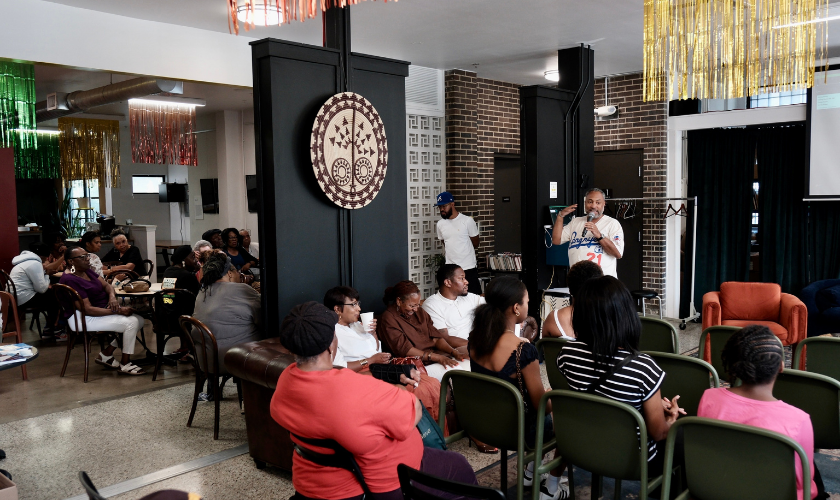
ThirdSpace Action Lab is doing real community-centered work. The term "third place" describes spaces that are neither home nor work, where members of the community come together, and that's precisely what co-founders Evelyn Burnett and Mordecai Cargill, along with their team, have built. I was there for one of their Intergenerational Lunch events, where neighbors across generations share a meal and conversation around a specific topic. ThirdSpace exists to interrupt the cycle of disinvestment and displacement that hollows out low-income communities of color. Their team runs programs like Intergenerational Lunch, operates a bookstore, and provides equity-centered consulting services to clients throughout the Cleveland area.
I thought about third places quite a bit while in Cleveland, and not only because of ThirdSpace. Cleveland's park system covers more than 25,000 acres, one of the largest and most celebrated in the country, and it reads as evidence of a city that has long understood the value of shared physical space, not just shared programming. Culture doesn't require a stage or a wall to hang on. Sometimes it just requires a bench, a table, or a well-maintained lot where people are willing to stop and engage with one another.
For Pittsburgh, the question isn't whether we value shared space, our own parks and neighborhood gathering spots make that case well enough. It's whether we're funding the organizations, like ThirdSpace, that do the harder work of turning shared space into shared trust across generations and income lines.
Collaboration as shared infrastructure
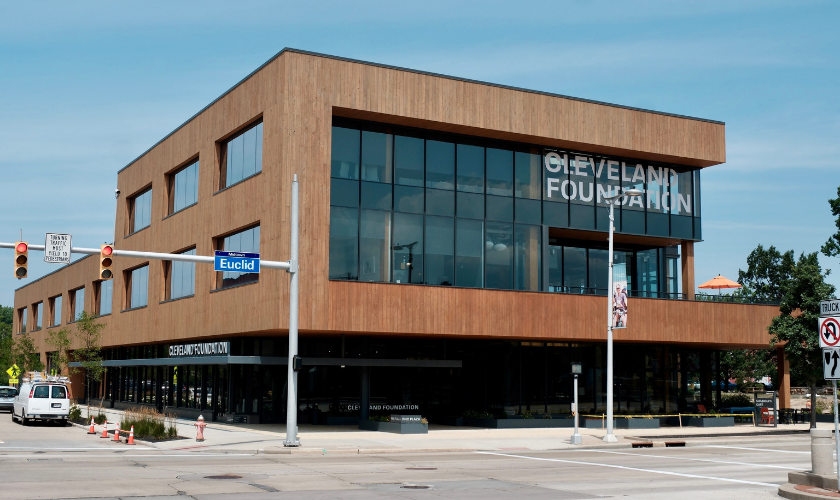
At the Cleveland Foundation, President and CEO Lillian Kuri and Chief Impact Officer Joyce Pan Huang showed me their offices and the Midtown Collaboration Center, a state-of-the-art, purpose-built hub designed to give nonprofits a shared home and encourage collaboration across mission areas. The premise is simple: when enough organizations work under one roof and cross paths regularly, collaboration stops being something that has to be scheduled and becomes a natural part of the day.
Pittsburgh has plenty of collaborative space, from coworking environments like Emerald City, Field Day, and OneValley, to mixed-use hubs like the Millvale Food + Energy Hub. But at the nonprofit level specifically, we largely lack what the Cleveland Foundation intentionally built here: a place where organizations from entirely different fields routinely work alongside one another. The Center brings together groups focused on the arts, education, financial empowerment, technology literacy, housing, food security, community health, and workforce development, which creates the conditions for partnerships that might not otherwise emerge. Daily proximity makes collaboration less dependent on calendars and far more dependent on the informal conversations and chance encounters that build trust over time.
I don't want to overstate the comparison. Pittsburgh has made meaningful investments in strengthening our nonprofit sector, and the early conversations that eventually became ElevateNP wrestled seriously with what a nonprofit "hub" should actually look like: a physical place, a shared suite of services, or a digital platform connecting organizations. Cleveland answered that question with brick and mortar, and my visit made me wonder whether it's worth revisiting.
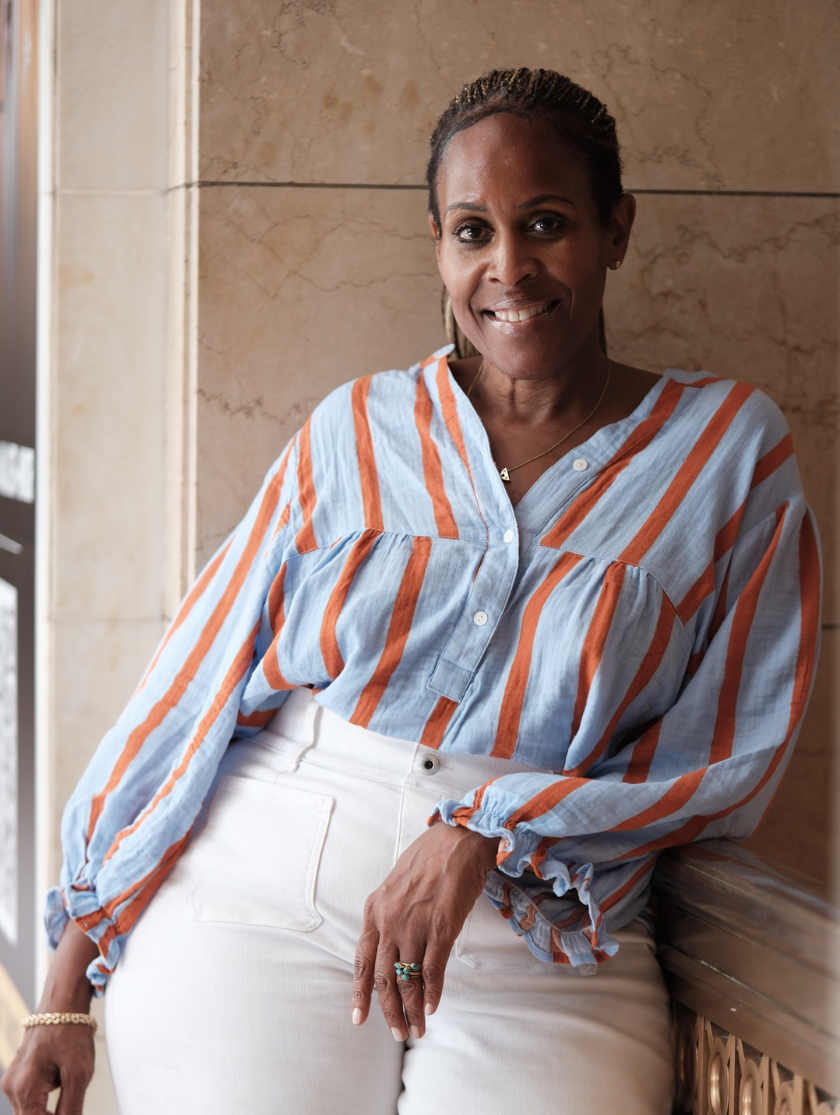
Rhonda came to the role with her own family's cultural history behind her. Her parents, Malcolm and Ernestine Brown, founded a pioneering Black-owned fine art gallery in Cleveland in 1980, and she's carrying that legacy forward in her own way while making sure city policy lifts up Cleveland's artists and culture bearers rather than getting in their way.
Rhonda was my shepherd on my final day in Cleveland, driving me around the city. During our time together, she spoke several times about Cleveland's Transformative Arts Fund, or TAF, a $3 million initiative funded through federal dollars the city received through the American Rescue Plan Act. TAF was designed to support bold, artist-led public art in neighborhoods across Cleveland. Rhonda chairs the committee that oversees it, working alongside Assembly for the Arts and LAND studio as administrative partners. The fund's premise is straightforward but easy to overlook: some of the most ambitious cultural projects are too large, too slow, or too risky for philanthropy to fund on its own, and if a city actually wants that work to exist, it has to be willing to put public money behind it at a scale that doesn't choke a project before it's even begun.
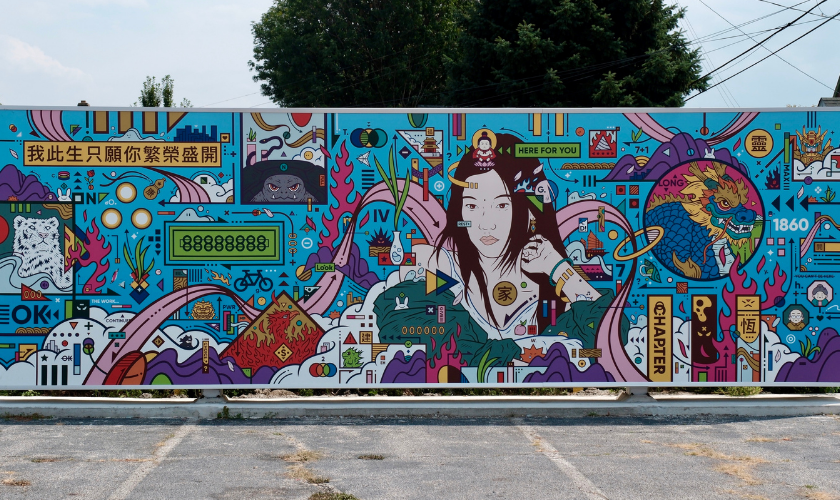
One of those stops was a small parklet in Cleveland's Asiatown neighborhood, now a permanent fixture thanks to a TAF award received by Jordan Wong, a former Pittsburgh artist. Jordan's work has been shown in Pittsburgh at ZYNKA Gallery's secondary space, The Portal, and his work can be found within the Children's Museum of Pittsburgh.
The city’s investment through TAF supported multiple outcomes. It transformed a corner of Asiatown into a gathering space the neighborhood didn't have before, one that reflects the cultural identities of the people who gather there. It was also transformative for Jordan's own practice and career, the kind of investment that gives an artist real runway rather than just a single line in a CV.
Thanks to a grant from Pennsylvania Creative Industries, powered by Pennsylvania Council on the Arts, the City of Pittsburgh is issuing an RFQ for a consultant to serve as its Creative Strategist. Could this grant-funded position eventually evolve into a permanent role within the Mayor's cabinet? Only time will tell. I certainly hope so, and it's a vision the Arts Council will continue to advocate for.
Generosity through mentorship and social capital
During my time with Rhonda, I also met Kumar Arora, a Cleveland native and serial entrepreneur who returned home after building a career and a network elsewhere. Kumar has been remarkably generous with both his knowledge and his relationships, and a TAF grant let him turn that generosity into something resourced and repeatable. Since his return to Cleveland, Kumar has invested real time helping Cleveland-based designers and artists develop the business skills needed to compete beyond their local market, while opening doors to opportunities they might never have found on their own.
Kumar’s work isn't simply teaching artists how to run a business. He's helping them understand licensing, intellectual property, contract negotiation, pricing, and brand strategy, and how to position their work for partnerships with professional sports teams, national brands, and major events. These are specialized, teachable skills that rarely show up in an artist's education, yet they can fundamentally change what a creative career looks like.
In Pennsylvania, there’s a heightened focus on mentorship, professional development, and workforce training as priorities for the creative sector. But they raise a question worth sitting with: what are we actually preparing artists for? If the opportunities available to them are limited to what already exists inside our local ecosystem, training alone won't change where their careers can go.
What makes Kumar's approach compelling is that it doesn't stop at upskilling. He challenges artists to see commercial potential in their work that they may never have considered, then spends the social capital he's built over decades connecting them to real opportunities. He isn't only a mentor. His relationships are a bridge between Cleveland's creative talent and markets that exist well beyond city limits.
That's the piece I'd want Pittsburgh to borrow, more than any single training curriculum: a person, or a role, who serves as a super connector and expands what artists believe is possible for their own work, and then walks alongside them into bigger markets. We have generous, connected people in this region already doing pieces of this work informally. Cleveland's answer was to fund that kind of work directly, through TAF, rather than leave it to chance. The opportunity is figuring out how to make that kind of bridge-building a deliberate, resourced part of how we support artists.
Distance worth bridging
Pittsburgh and Cleveland are only two hours apart, and each community is filled with an impressive amount of creative individuals and organizations, often tackling many of the same challenges and opportunities.
Instead of just noticing that we have so much in common, what if we had a more intentional model of exchange and collaboration between our two cities?
Imagine shared artist residencies, exhibitions that travel between Pittsburgh and Cleveland, artists building meaningful careers in both markets instead of just one, or a standing network that regularly brings together the practitioners, funders, and civic leaders shaping each region's cultural ecosystem. Rather than reinventing solutions independently, we could be building on one another's successes and strengthening the entire corridor.
Our sports teams might be rivals, but our city’s artistic communities could bridge the gap, building a relationship worth collectively cheering for.