

OP-ED |
The Devil Is in the Details
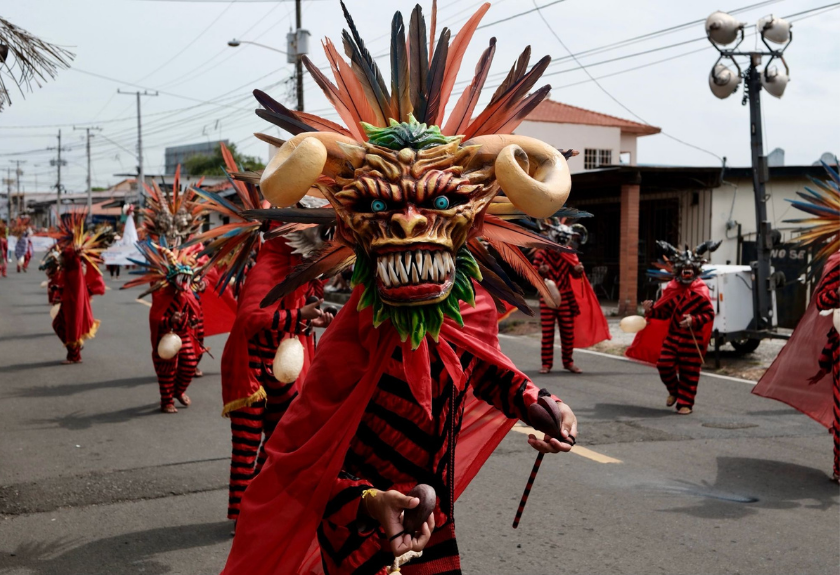
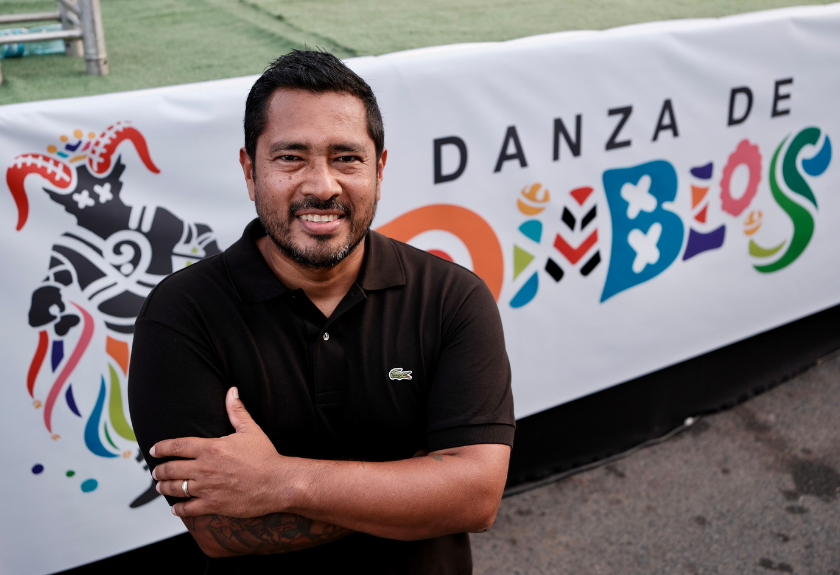
I recently flew to Panama City, Panama, then drove three and a half hours south to Chitré, at the invitation of filmmaker Luis Carlos Garcia, to witness something that hadn't happened since the early 1980s: delegations of Diablos, iconic folkloric devil characters from every corner of the country, including Caribbean islands, gathering in one place for a national parade of Danzas de Diablos. It's a striking story on its own. But it's also a genuinely useful case study for a question I think about constantly in my work: how do we collectively experience and shape culture?
Before I get into Panama, I want to be precise about a few terms, because the words we use can sometimes get sloppy in ways that have unintended consequences.
What Culture Actually Means, And Why Art Isn't the Only Door to It
We often see “art” and “culture” used in conjunction with each other. But they're not the same thing and we do ourselves a disservice when we assume that art is the only door to culture.
Culture is the whole shared system: the beliefs, values, language, rituals, food, humor, and knowledge that a defined group of people uses, as a group, to answer its biggest questions: who are we, and how do we show that to others. Culture isn't something you calculate or prescribe. Much of it is inherited, but it isn't fixed by that inheritance alone; we each have some hand in shaping and refining it as we go. What culture rarely does is change quickly. It shifts over years and decades, not hours and minutes, and it moves through a group the same way it was passed to you: by being lived, not decided.
And culture rarely exists at just one scale. It behaves more like a set of Russian nesting dolls than a single fixed thing. A household has a culture. A workplace has a culture. A neighborhood or a town has a culture. A city or a region has a culture. Each of those is nested inside the next, each one is real on its own terms, and each one presses on the ones around it. A person can be shaped simultaneously by a family's particular habits, an office's particular norms, and a city's particular temperament, without any contradiction.
Culture is also not static. It's fluid, and it evolves every time new people enter the defined group, a company hires someone new, a family gains a member through marriage, a neighborhood absorbs new residents. But evolution isn't the same as erasure. A culture that changes because new people have joined it still carries forward whatever came before; it doesn't get to skip its own history and start fresh. Each new layer sits on top of the layers that already existed, shaped by them as much as it reshapes them going forward.
Art is one of the ways culture becomes tangible, a way of expressing it, preserving it, or pushing back against it. But culture doesn't need a single object to exist, and plenty of art has nothing to do with a shared cultural tradition at all. The overlap between the two is enormous. However, it's just an overlap, not a synonym.
Which brings us to folk art, the category that the costumes, music, and dances of Panama's Diablos belong to.
Folk art is art made within and for a community, usually passed down through apprenticeship and observation rather than formal training, and usually tied to a specific function: a ritual, a celebration, a rite of passage. It's rarely made for a gallery or a proscenium stage. Makers of folk art may be unknown outside their communities, even while being well-known and respected figures within them. Folk art's value isn't primarily commercial nor aesthetic, it's relational. Its job is to communal throughline across time.
Resuscitating Panama's Danzas de Diablos as a National Convening
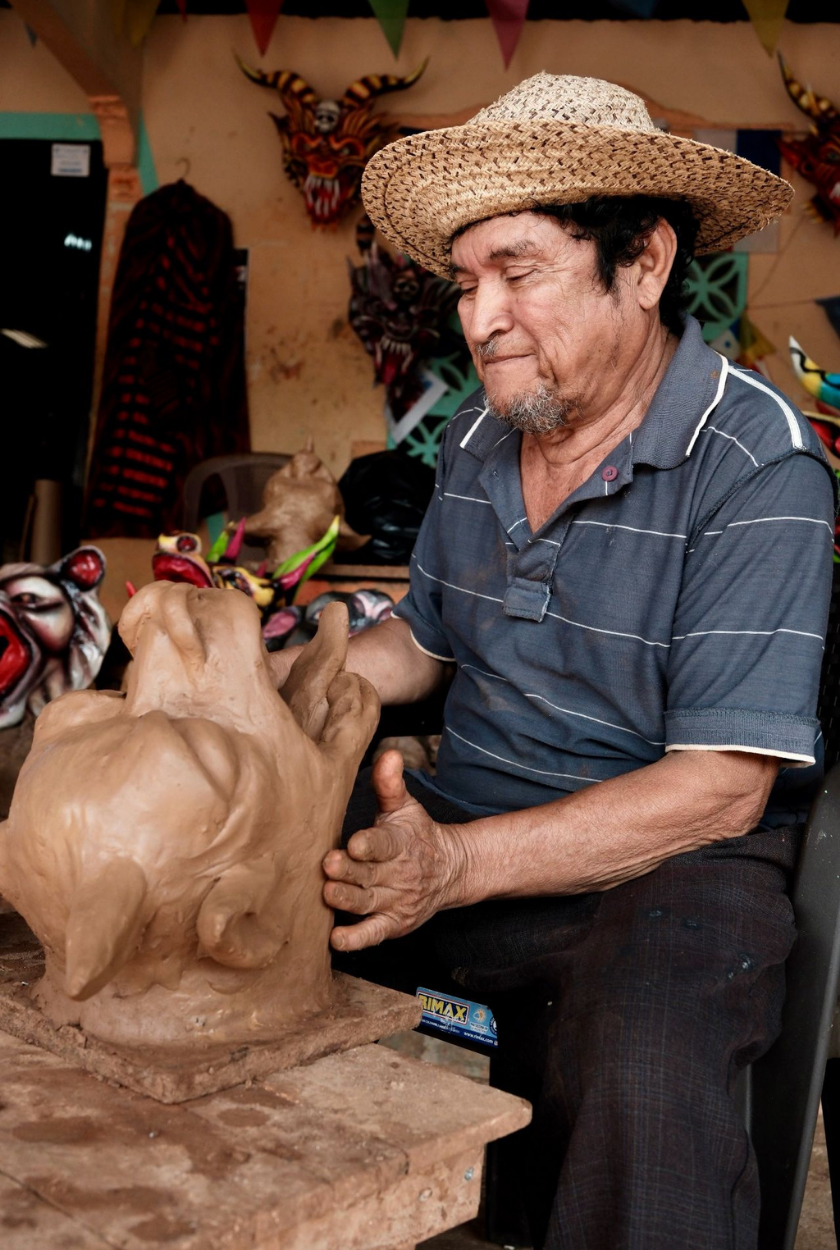
Danzas de Diablos, “Dance of the Devils,” didn't lie dormant for the past four decades. Culture bearers across Panama kept the tradition alive in their own regions. Artisans made masks. Tailors crafted costumes. Dancers carried the movements forward.
What hadn't happened in that time was a national convening: delegations of Diablos from every region gathering in one place, at the same time. Anyone Millennial-aged or younger had never experienced that energy and unification firsthand. And it's only when delegations come together that the nuances between them become visible and intimately understood. Seen in isolation, each version simply looks like the local tradition. Seen side by side, the differences in material, choreography, and theatrics become impossible to miss.
Take three examples from delegations that paraded in Chitré.
The Cucúa Diablos of San Miguel Centro, in Coclé province, are built entirely from the forest: costumes woven from the bark of the cucúa tree, natural dyes drawn from plants like velvet bean and turmeric, and masks framed with vines, deer antlers, and peccary jawbone. The dance is tied to Corpus Christi and grew out of the encounter between Catholic catechism and Indigenous cosmovision, the blending of imposed Christian teaching with existing Indigenous belief systems. Here, the Diablos represent the disorder that ritual and community must hold in check, and the whip each Diablo carries, once a symbol of colonial punishment, has been reclaimed as a tool of rhythm and ceremony.
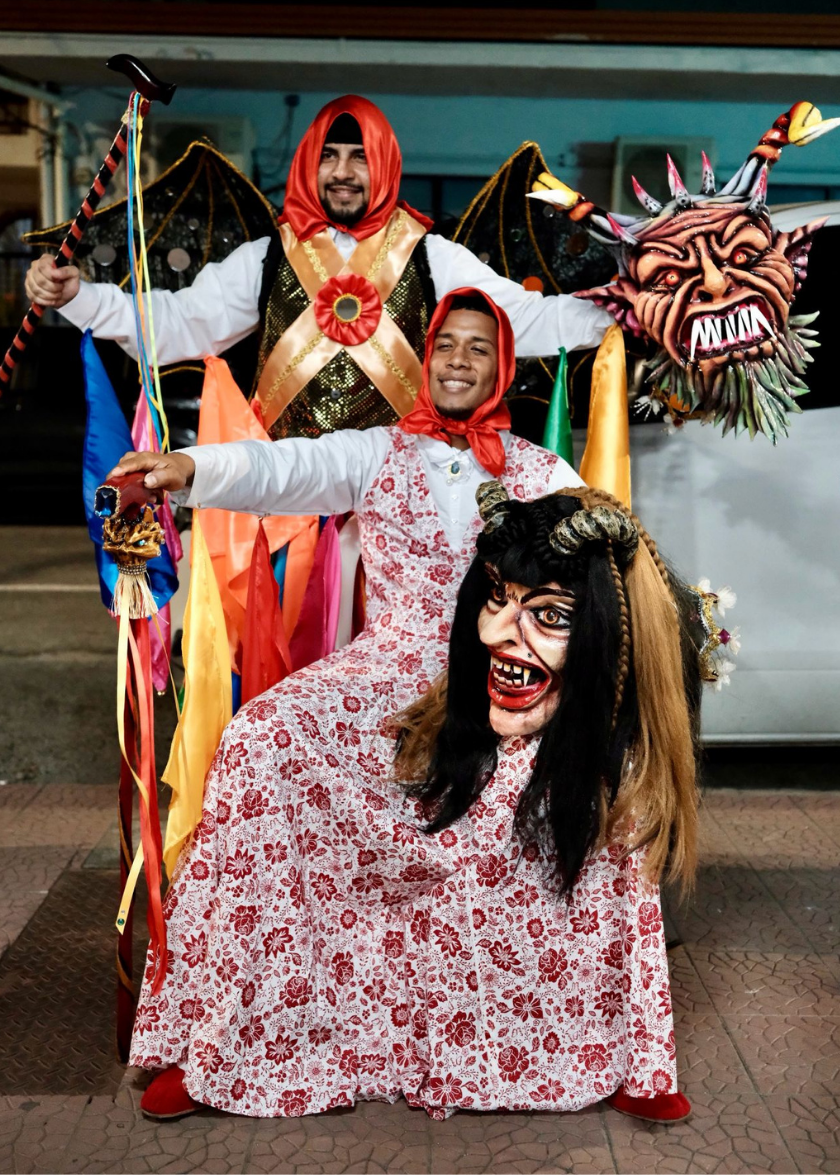
The Diablos Congos, carried by delegations from Bocas del Toro, are rooted in cloth, chains, and mirrors rather than natural materials, marking a different history entirely. The tradition traces back to the colonial era, when people were violently captured and trafficked from Angola, the Congo region, Cameroon, and Guinea, and forced into slavery in Panama; some escaped that bondage and formed independent, self-liberated communities called palenques. Here, Diablos represent the slaveholder and colonial oppressor, while the Congos represent the enslaved and rebellious population who resisted them, and the dance becomes a symbolic story of resistance, survival, and eventually freedom.
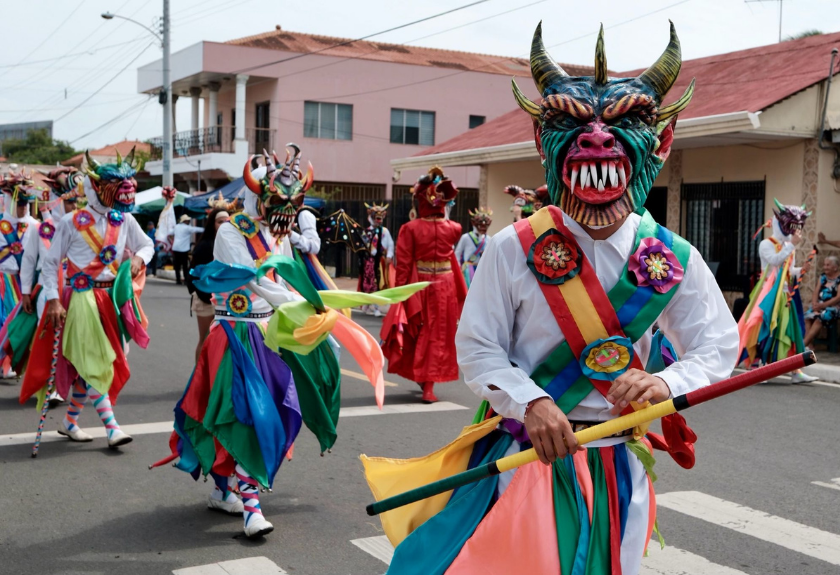
The Diablicos Limpios of Chitré are made of airbrushed papier-mâché and elaborate colorful satin costumes, reflecting a more theatrical, decorative tradition. This version grew out of Spanish colonization and the spread of Catholicism, staged as a religious allegory rather than a lived historical memory. Here, Diablos represent the forces of evil arrayed against an innocent soul, and the dance becomes a battle for that soul's protection, with San Miguel Arcángel defending it from corruption and harm.
All three customs are representative of Panama’s Diablos, yet each carries a distinct history and tells a different story. That nuance only becomes visible when the traditions are examined alongside one another. A single regional festival tells you a lot about one place. A national one tells you what an entire country's folk art actually contains, and how much variation a single tradition can hold.
Standing in the crowd in Chitré, watching delegations who'd traveled hours to be there, I found myself thinking less about Panama specifically and more about what it takes for any place to see itself this clearly. It's a rare thing for a country, or a city, to gather its own traditions in one place and let people study them side by side. Most of us never get that vantage point on our own culture. We're too close to it, too used to seeing it in fragments, to recognize the fuller shape it's actually taking.
That's the thought I carried home with me.
Is Pittsburgh a Cultural City? Bringing the Question Home
When I first moved to Pittsburgh, one of my earliest conversations was with Joseph Hall, Co-Executive Director of Kelly Strayhorn Theater. Joseph posed a question that's stayed with me ever since: Pittsburgh is undeniably an arts city, but is it a cultural city?
Three years later, I still don't have a clean answer, and the question keeps resurfacing. Every time I travel and experience a living cultural tradition, whether it's Panama's Diablos or the calendas of Oaxaca, Mexico, I find myself asking the same thing about home. What are Pittsburgh's cultural traditions? How have they evolved across generations? And are they being demonstrated and celebrated publicly, the way Chitré just filled its streets, or are they happening quietly, in private, disconnected from the region's civic life?
I don't think the honest answer is that Pittsburgh lacks culture. It's a city full of inherited practice, neighborhood ritual, and community memory. What I'm less sure of is whether we've named it, gathered it, and celebrated it with intentionality.
That uncertainty isn't just something I sit with personally. It's part of what shapes the Arts Council's advocacy work. It's why we've been in conversation with both the City of Pittsburgh and Allegheny County as each navigates its comprehensive planning process, making the case that culture deserves to be treated as a throughline within civic planning, not approached as an optional add-on. It's why we've been working with the City to help shape an RFQ for a Cultural Strategist. And it's why we've been encouraging the County to invest in a county-wide cultural plan as a complement to its comprehensive plan.
Panama's Danzas de Diablos offered something Pittsburgh doesn't have an equivalent of yet: a moment where an entire community paused to look at its own folk traditions side by side and recognize what it was holding. I don't know exactly what that would look like here, or even whether a single tradition could carry that kind of weight the way the Diablos do in Panama. But I do think the ingredients already exist, scattered across neighborhoods, congregations, block clubs, and family kitchens, waiting to be named and seen together rather than experienced one at a time.
So I'll leave this as an open question instead of a tidy conclusion: what feels like Pittsburgh culture to you? Not the exhibit you paid to see or the show you bought a ticket for, but the free, everyday, unticketed things, a parade, a recipe, a ritual, a gathering, that make this place feel like itself. I'd genuinely like to know what you'd name.
A Postscript, If Panama Has Piqued Your Interest
If any of this has left you wanting to see the Diablos for yourself, you don't have to leave Pittsburgh to do it. The Latin American Cultural Center opens Crossroads of the World: Panama on September 22, an exhibition featuring masks and objects tied to the country's Diablos alongside other dimensions of Panama's history and culture. Luis Carlos Garcia has work included in the exhibit, which will be open through June 2027, and he will also give an artist talk paired with a screening of his documentary. I encourage you to go.